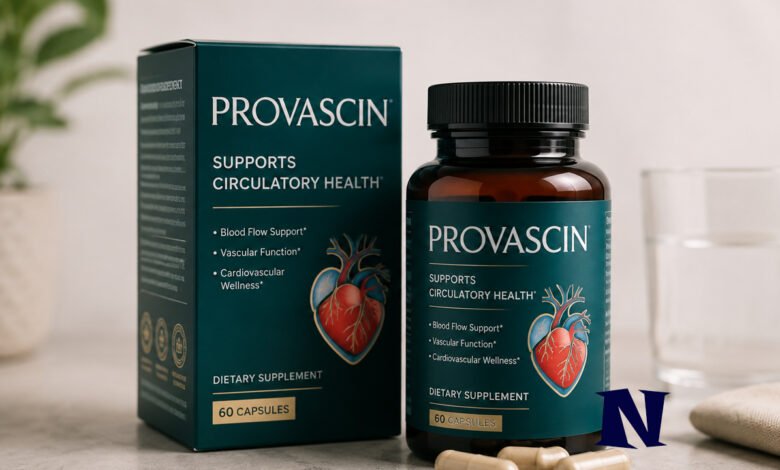
Provascin is a name associated with a dietary supplement developed for cardiovascular and general metabolic support. The best-documented version is PURICA Provascin, a multi-ingredient formula containing L-carnitine, Coenzyme Q10, Chaga mushroom, alpha-lipoic acid, grape seed extract, green tea extract, and several other compounds. It was marketed as a nutritional supplement rather than a prescription cardiovascular medicine.
People searching for Provascin often want to know what it does, what ingredients it contains, whether its claimed benefits are supported by evidence, and whether it is still available. The important point is that research on individual ingredients should not be confused with clinical proof for the complete Provascin formula. Its historical cardiovascular claims therefore need to be considered carefully.
What Is Provascin?
Provascin is best documented as a dietary supplement associated with PURICA and The Nutraceutical Medicine Company Inc. Historical records identify PROVASCIN in connection with dietary supplements, specifically anti-catabolic supplements. The product later became known through retailer listings and PURICA material as a broader formula intended to support cardiovascular health, blood vessels, energy metabolism, and related functions.
This distinction matters because some online descriptions make Provascin sound like a pharmaceutical drug. Reliable historical records instead support its identity as a nutritional supplement. It should therefore not be confused with prescription medications for hypertension, heart disease, high cholesterol, angina, or other cardiovascular conditions.
Provascin Background and History
The Provascin name has a documented history going back more than two decades. Canadian trademark material shows that The Nutraceutical Medicine Company Inc. applied for the PROVASCIN mark in January 2003. The listed goods included dietary supplements described as anti-catabolic supplements. The company also connected the name with research and educational activities involving metabolic health.
In the United States, the PROVASCIN trademark was filed in January 2003 and was later registered. Public trademark information identifies The Nutraceutical Medicine Company Inc. as the owner and lists dietary supplements among the relevant goods. These records provide stronger evidence about the product’s history than recent articles that offer conflicting explanations of what Provascin means.
The product later became associated with PURICA, a Canadian natural-health brand. Historical company-related material described Provascin as a broad-spectrum cardiovascular support formula. Retail listings also document bottles containing vegetarian capsules, including a 120-capsule format.
However, historical existence does not establish that every product currently advertised under the Provascin name is identical. Anyone encountering Provascin today should check the manufacturer, ingredients, package information, expiry date, and applicable regulatory information.
Provascin Development and Purpose
Unlike a person’s career, Provascin has a product-development history. It appears to have been created as a multi-ingredient nutritional formula rather than a conventional medicine based on one pharmaceutical active ingredient. Its formula combined amino-acid-related compounds, antioxidants, botanical extracts, a mushroom ingredient, and substances involved in cellular energy processes.
Historical PURICA material positioned the product around broad cardiovascular support rather than one narrowly defined purpose. That approach explains why older descriptions mention heart health, blood vessels, cholesterol, blood pressure, energy metabolism, and oxidative stress in the same discussion.
Those descriptions should be understood as historical product positioning and not proof that Provascin can treat cardiovascular disease. Supplements and prescription medicines have different evidence and regulatory requirements.
Provascin Ingredients
Historical retailer information provides a relatively detailed picture of the PURICA Provascin formula. The main ingredients included L-carnitine, alpha-ketoglutaric acid, certified organic micronized Chaga, Coenzyme Q10, betaine hydrochloride, DL-alpha-lipoic acid, grape seed extract, and green tea extract.
The documented formula listed approximately 188 mg of L-carnitine and 125 mg each of alpha-ketoglutaric acid and micronized Chaga per capsule. CoQ10 was listed at 38 mg, while betaine hydrochloride was 31 mg. DL-alpha-lipoic acid appeared at 13 mg, with grape seed and green tea extracts at 9 mg each.
Non-medicinal ingredients listed by retailers included microcrystalline cellulose, hypromellose, and plant-source magnesium stearate. Because Provascin may no longer be part of PURICA’s regular product range, consumers should not assume that an unfamiliar product sold today has this exact formula.
L-Carnitine
L-carnitine is naturally involved in the transport of fatty acids into mitochondria, where they can be used in energy production. It is present naturally in the human body and can also be obtained from food or supplements.
This biological role explains why L-carnitine frequently appears in products aimed at energy metabolism and physical performance. However, evidence about an individual ingredient cannot automatically demonstrate that a multi-ingredient product containing it will produce a particular cardiovascular result.
For Provascin, L-carnitine formed only one part of a much larger formula. Its presence should therefore be viewed as part of the product’s nutritional design rather than proof that Provascin treats a specific disease.
Coenzyme Q10
Coenzyme Q10, commonly called CoQ10, is another well-known component of the documented Provascin formula. It is a naturally occurring substance involved in cellular energy production and also has antioxidant properties.
CoQ10 has attracted considerable scientific interest, including research related to cardiovascular health. Results depend on the condition being studied, dose, patient population, and other factors.
Its inclusion gives Provascin a plausible nutritional connection to energy metabolism, but it does not establish the effectiveness of the finished supplement. A clinical study involving standalone CoQ10 cannot simply be treated as a clinical study of Provascin.
Chaga Mushroom
Provascin also contained micronized Chaga, a fungus known scientifically as Inonotus obliquus. Chaga has a long history of traditional use and has become popular in modern supplements, particularly products marketed around antioxidant and immune-related support.
Laboratory research has examined compounds found in Chaga, but laboratory findings are different from evidence demonstrating a meaningful clinical benefit in people.
Chaga may also be unsuitable for some individuals, particularly when combined with certain medications or existing health conditions. The presence of a natural ingredient should never be interpreted as a guarantee that a supplement is safe for everyone.
Alpha-Lipoic Acid
Alpha-lipoic acid is involved in cellular metabolism and has antioxidant properties. The body produces small amounts naturally, and the compound is also sold separately as a dietary supplement.
Its biological functions help explain its inclusion in a formula designed around metabolic and antioxidant support. Research has explored alpha-lipoic acid for several health-related purposes, but those studies should not be used to make unsupported claims about Provascin as a whole.
People taking medication, particularly medication affecting blood sugar, should discuss supplement use with a qualified healthcare professional because nutritional compounds can sometimes influence treatment or create interactions.
Grape Seed and Green Tea Extracts
Grape seed and green tea extracts were included in relatively small amounts in the historical Provascin formula. Both are sources of plant compounds with antioxidant activity and are common ingredients in nutritional supplements.
Green tea contains catechins and other biologically active compounds, while grape seed extract contains polyphenols including proanthocyanidins. Researchers have investigated these compounds for various potential effects.
Again, ingredient research is not the same as product research. The presence of plant antioxidants can explain the reasoning behind Provascin’s formulation, but it cannot independently prove the wider health claims historically associated with the supplement.
What Was Provascin Used For?
Provascin was primarily marketed for cardiovascular support. Historical product information connected the formula with the heart, blood vessels, cholesterol balance, circulation, energy metabolism, and antioxidant protection.
The wording “support” is important. A supplement designed to support normal body functions is not automatically a treatment for a diagnosed disease. Claims that Provascin cures heart disease, reverses hypertension, removes arterial blockages, or replaces prescribed medication would require strong clinical evidence.
Consumers should be particularly careful with cardiovascular products because symptoms involving the heart and circulation can represent serious medical conditions. Chest pain, difficulty breathing, fainting, sudden weakness, or suspected heart attack or stroke require urgent medical attention rather than supplement use.
Potential Provascin Benefits
The potential benefits associated with Provascin largely come from the intended roles of its individual ingredients and the historical marketing of the formula. L-carnitine and CoQ10 are involved in cellular energy processes, while alpha-lipoic acid, grape seed extract, green tea extract, and Chaga contain compounds associated with antioxidant activity.
This gives the formula a reasonable nutritional basis for being marketed around cardiovascular and metabolic wellness. It does not, however, establish that everyone taking Provascin will experience measurable improvements.
Claims involving cholesterol, blood pressure, chronic venous insufficiency, glucose control, or cardiovascular disease should be treated differently from general nutritional-support claims. Such medical outcomes require appropriate clinical evidence.
Does Provascin Have Proven Cardiovascular Benefits?
There is an important difference between scientific evidence concerning Provascin’s ingredients and evidence concerning Provascin itself. Several ingredients in the historical formula have been studied independently. That means researchers may know something about CoQ10, L-carnitine, alpha-lipoic acid, green tea, or other components.
What is much harder to establish is whether the exact complete Provascin formula produced clinically significant cardiovascular outcomes. Publicly accessible information does not provide strong evidence from large, high-quality clinical trials demonstrating that Provascin itself treats or prevents cardiovascular disease.
For that reason, it is more accurate to describe Provascin as a cardiovascular-support supplement than as a proven cardiovascular treatment. Ingredient-level research should not be stretched into claims about the complete formula.
Provascin Dosage and Directions
Historical retailer information listed several capsules per day, with different amounts mentioned depending on the intended use. Those archived directions should not be treated as current personalized dosage advice.
This is particularly important because the established Provascin product appears to have become difficult to obtain through regular retailers. An old online product page may describe a formula that has been discontinued, reformulated, or is no longer available in fresh stock.
Anyone who finds Provascin for sale should follow the instructions on the actual current package rather than dosage information copied from an old website. A pharmacist or doctor can also review the ingredients and determine whether they conflict with medications or health conditions.
Provascin Side Effects and Safety
There is no reliable basis for saying that Provascin is free from side effects simply because its ingredients are nutritional or naturally derived. Supplements can cause digestive discomfort, allergic reactions, headaches, changes in blood sugar, or other unwanted effects depending on their ingredients and the individual taking them.
Potential interactions are also important. People taking blood-pressure medication, anticoagulants or other blood-thinning treatments, diabetes medication, or multiple supplements should be especially careful.
Pregnant or breastfeeding people and those with liver, kidney, metabolic, cardiovascular, bleeding, or other significant medical conditions should seek professional advice before taking an unfamiliar supplement. Individual ingredients may carry precautions even when the complete product has limited safety data.
Is Provascin a Prescription Medicine?
The documented PURICA Provascin product is a supplement, not a prescription cardiovascular drug. This is one of the most important points because online pages sometimes provide conflicting descriptions.
The PROVASCIN trademark record itself identifies the relevant goods as dietary supplements. Historical retailer listings also present PURICA Provascin as a capsule-based natural health product containing multiple nutritional and botanical ingredients rather than a pharmaceutical active ingredient.
Consumers should therefore avoid confusing Provascin with similarly named prescription products. Always look at the exact spelling, manufacturer, active ingredients, regulatory information, and package label before using any health product.
Is Provascin FDA Approved?
It is misleading to evaluate a dietary supplement in exactly the same way as an FDA-approved prescription medicine. In the United States, dietary supplements generally do not undergo the same premarket approval process for effectiveness that new prescription drugs must complete.
There is no verified basis for presenting Provascin as an FDA-approved medication for treating heart disease, hypertension, high cholesterol, or another cardiovascular condition.
This does not automatically mean that every supplement lacking drug approval is unsafe or illegal. It means the regulatory category and strength of evidence are different. Consumers should distinguish carefully between a product being marketed as a supplement and a medicine approved to treat a specific medical condition.
Provascin Availability
Availability is one of the more confusing parts of researching Provascin today. Historical retailer pages clearly document PURICA Provascin, including the 120-capsule version, but current information indicates that the established product is difficult to find and may have been discontinued from regular retail channels.
Old product pages can remain searchable long after stock disappears. Their existence does not prove that a manufacturer is currently producing fresh bottles.
Consumers should therefore be cautious when finding Provascin on unfamiliar marketplaces. Check the expiry date, lot information, manufacturer, tamper seal, ingredient list, seller reputation, and applicable regulatory identification before considering a purchase.
Provascin Personal Life and Family
Personal-life and family sections do not apply to Provascin because it is a product name rather than a person. There is no relationship status, spouse, children, parents, or personal biography associated with the supplement itself.
The relevant background instead concerns the organization connected with the name. Public trademark records identify The Nutraceutical Medicine Company Inc. as the owner of the PROVASCIN trademark.
Specific personal details about individuals involved in developing the formula are not necessary to understand the product and should not be invented. Where reliable public information is unavailable, the appropriate description is “Not publicly confirmed.”
Provascin Physical Appearance
Provascin does not have physical characteristics such as human height, weight, eye color, or body measurements. Historical product listings describe it in capsule form, including vegetarian capsules sold in bottles.
A 120-capsule PURICA Provascin product is documented by retailer information, while other historical references have mentioned larger bottle sizes.
Packaging can change over time, however. Anyone trying to identify an authentic product should rely on the manufacturer information, ingredient panel, regulatory details, lot number, and packaging supplied through a trustworthy seller rather than an image found on an unrelated website.
Provascin Net Worth
There is no meaningful verified “net worth” figure for Provascin because Provascin is a product or trademark rather than an independently reported company or public individual.
Sales revenue specifically attributable to Provascin has not been publicly confirmed in the reliable sources reviewed for this article. Any website giving an exact Provascin net worth without company financial records would therefore be making an unsupported estimate.
The safer answer is: Not publicly confirmed.
For consumers, financial estimates have little relevance to determining product quality. Ingredient transparency, manufacturing standards, safety information, independent testing, regulatory compliance, and scientific evidence are more useful factors.
Provascin Social Media Presence
No verified social media account dedicated specifically to Provascin has been publicly confirmed. Historical promotion of the product was more closely associated with PURICA and retailers carrying the supplement.
This is another area where caution is useful. Social posts, testimonials, influencer recommendations, and customer reviews are not substitutes for clinical evidence.
A positive personal experience can be genuine while still being scientifically insufficient to prove that a supplement works for a particular condition. When researching Provascin, consumers should give greater weight to product labels, regulatory records, credible scientific research, and professional medical guidance than promotional social media content.
Life Outside the Provascin Product Line
Because Provascin is not a person, “life outside work” does not apply in the normal biographical sense. A more relevant question is what happened to the product outside its original marketing period.
Historical records demonstrate that the Provascin name has existed for years, while current retailer information suggests that availability has declined significantly. This creates a situation where the product maintains an online footprint even though fresh retail availability may be limited.
It also explains why modern search results can be confusing. New articles may discuss Provascin without clearly separating documented historical information from speculation, marketing claims, or similarly named products.
How to Evaluate Provascin Before Buying
Anyone considering Provascin should first establish exactly what product is being offered. The name alone is not enough. Look for the manufacturer, complete ingredient list, amounts per serving, dosage instructions, warnings, expiry date, lot number, country of manufacture, and appropriate regulatory information.
Be cautious when a seller promises dramatic results such as curing cardiovascular disease, permanently lowering blood pressure, eliminating cholesterol problems, or replacing prescription treatment.
It is also worth checking whether the product being advertised matches the historical PURICA formula. A completely different ingredient list under the same or similar name should be evaluated as a different product rather than automatically receiving the reputation of the original Provascin supplement.
Interesting Facts About Provascin
Provascin has a longer documented history than many recent online articles suggest. Canadian trademark material records the name in connection with dietary supplements as early as 2003, while the United States trademark application was also filed in 2003.
Another interesting feature is the formula itself. Instead of relying on one central ingredient, the documented PURICA version combined eight active ingredients covering several nutritional categories.
The product also demonstrates an important lesson about supplement research. A formula may contain ingredients with genuine scientific research behind them while still lacking strong clinical evidence for the finished combination. Those two kinds of evidence should never be treated as identical.
Conclusion
Provascin is best understood as a historically documented nutritional supplement associated with PURICA and The Nutraceutical Medicine Company Inc. The established formula combined L-carnitine, alpha-ketoglutaric acid, Chaga, CoQ10, betaine hydrochloride, alpha-lipoic acid, grape seed extract, and green tea extract and was promoted mainly for broad cardiovascular and metabolic support.
The most important distinction is between potential benefits suggested by individual ingredients and proven benefits of the complete Provascin formula. Public information does not provide strong clinical evidence establishing Provascin as a treatment for cardiovascular disease, hypertension, high cholesterol, or other medical conditions.
Its current availability also appears limited, so consumers should be careful with old or unfamiliar listings. Provascin should not replace prescribed cardiovascular treatment or professional medical care. Anyone considering a product sold under this name should verify its exact ingredients and manufacturer and discuss it with a qualified healthcare professional when medications or existing health conditions are involved.
Frequently Asked Questions About Provascin
1. What is Provascin?
Provascin is best documented as a dietary or natural health supplement associated with PURICA and The Nutraceutical Medicine Company Inc. Historical information connects it mainly with cardiovascular and nutritional support. Its formula included L-carnitine, CoQ10, Chaga, alpha-ketoglutaric acid, betaine hydrochloride, alpha-lipoic acid, grape seed extract, and green tea extract. It should not be confused with a prescription cardiovascular medicine simply because its name sounds pharmaceutical.
2. What is Provascin used for?
Provascin was historically marketed for broad cardiovascular support, including support related to heart and blood-vessel health, energy metabolism, antioxidants, and healthy cholesterol function. Some historical promotional material made broader wellness claims. These should not be interpreted as proof that Provascin treats cardiovascular disease. Anyone with diagnosed high blood pressure, high cholesterol, heart disease, circulation problems, or similar conditions should follow professional medical advice rather than replace prescribed treatment with a supplement.
3. What ingredients are in Provascin?
The documented PURICA formula contained L-carnitine, alpha-ketoglutaric acid, certified organic micronized Chaga, Coenzyme Q10, betaine hydrochloride, DL-alpha-lipoic acid, grape seed extract, and green tea extract. Historical retailer information also lists hypromellose, microcrystalline cellulose, and plant-source magnesium stearate as non-medicinal ingredients. Because current availability is uncertain, people should verify the actual label on any product currently being sold as Provascin instead of assuming every version has the historical formula.
4. Is Provascin safe?
There is not enough evidence to say that Provascin is appropriate for every person. Its individual ingredients can have side effects or interact with medications, and risk depends on dose, health status, other supplements, and prescription treatments. Particular caution is appropriate for people using cardiovascular drugs, blood thinners, diabetes medicines, or multiple medications. Pregnant or breastfeeding people and those with significant medical conditions should seek professional advice before taking an unfamiliar supplement.
5. Is Provascin still available?
Historical retailer pages confirm that PURICA Provascin was previously sold, including in 120-capsule bottles. Current evidence suggests that the established product has become difficult to find and may have been discontinued through major retail channels. Old listings can remain visible online even when a product is no longer manufactured or stocked. Buyers who encounter Provascin today should verify the manufacturer, formula, expiration date, lot number, seller, packaging, and regulatory details before purchasing.
See more amazing Information visit Novira Magazine