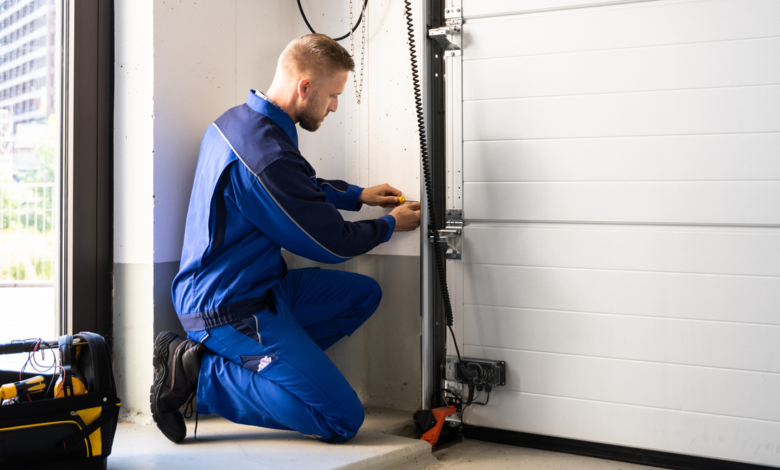
A garage door looks simple from the driveway, but its movement depends on several mechanical and electrical parts working together under significant force. Routine cleaning, visual checks, and early attention to small changes can ensure smooth overhead door operation, but safe upkeep also depends on knowing which tasks belong in the DIY category and which should be left alone. A minor adjustment made in the wrong place can turn an ordinary maintenance job into a serious safety problem.
Start by Removing the Obvious Hazards
Before inspecting a door closely, make sure nobody can activate it unexpectedly. Unplugging an automatic opener prevents the motor from engaging while work is underway, and disconnecting the opener from the door may be appropriate when checking certain components manually. Garage doors are also much heavier than they may appear when their counterbalance system is functioning normally, so working underneath an unsupported door is never a good idea.
The work area matters too. Move vehicles, tools, toys, and other objects away from the opening so there is room to inspect the system without tripping or becoming trapped between equipment and the moving door. If a ladder is needed for a simple visual inspection, it should stand on firm, level flooring and provide enough height to avoid overreaching. Gloves and eye protection are sensible precautions whenever dirt, metal edges, or moving hardware are involved.
Know What You Can Inspect Without Taking Apart
Many useful garage door checks require observation rather than disassembly. Tracks can be inspected for accumulated dirt, loose debris, dents, or obvious bends. Rollers can be watched while the door moves to see whether they travel consistently through the tracks. Excessive vibration, scraping, hesitation, or unusual sounds may indicate that something is wearing unevenly. Worn rollers can increase friction and place additional strain on other parts of the system.
The opener deserves attention as well. Check whether it sounds different from normal, struggles during part of its travel, or stops unpredictably. Visible wiring should appear intact rather than pinched, frayed, or pulled loose. Problems involving the opener do not automatically mean the motor itself has failed; sensors, connections, door balance, and mechanical resistance can all influence how the system behaves.
A door that suddenly hangs unevenly, becomes unusually heavy, or refuses to move normally may have a problem deeper in the lifting system. Once the issue involves cable tension, spring force, major alignment problems, or components that require disassembly, professional repair through https://www.yourgaragedoorpro.com/ becomes more appropriate than continued experimentation. Stopping at that point helps prevent a manageable repair from becoming a damaged door or an injury.
Treat Springs and Cables Differently From Routine Hardware
Springs are among the most important boundaries between basic maintenance and hazardous repair work. Depending on the design, a garage door may use torsion or extension springs to counterbalance much of its weight. These parts operate under substantial tension, and adjusting or replacing them without the correct tools and training can cause serious injury. Visual inspection for rust, separation, or obvious damage is one thing; manipulating spring tension is another.
Cables deserve similar caution. They transfer forces within the counterbalance system and can contribute to uneven lifting when damaged. Fraying, slack, an unusual cable position, or one side of the door rising differently from the other are reasons to stop operating the door until the cause is understood. Pulling, tightening, or repositioning a cable without knowing why it changed can release stored energy or create additional imbalance.
Pay Attention to the Door’s Safety Systems
Modern automatic doors use safety features designed to reduce the chance of the door closing on a person, pet, vehicle, or object. Photo-eye sensors positioned near the bottom of the opening send a beam across the doorway. Dirt, an obstruction, misalignment, damaged wiring, or a failed sensor can interfere with that system and cause the door to reverse or refuse to close.
Cleaning sensor lenses and checking that nothing blocks their path are reasonable homeowner tasks. Safety reversal should also be treated as something worth testing periodically rather than assuming it works because the opener runs. If the door continues closing when an obstruction is detected, behaves inconsistently, or requires repeated attempts to operate, it should not simply be forced closed or bypassed for convenience.
Small Changes Often Provide Early Warnings
Garage door problems rarely become easier to fix after months of being ignored. A new grinding sound, jerky movement, a panel that sits differently, or a door that pauses during travel can indicate developing wear. Catching these changes early makes it easier to distinguish ordinary cleaning or maintenance needs from damaged rollers, tracks, sensors, springs, cables, or opener components.
It also helps to judge the whole system instead of focusing only on the part making noise. A struggling opener, for example, may be reacting to excessive resistance elsewhere rather than suffering from an electrical failure. Likewise, a roller problem may reflect track damage or poor alignment. Looking at how the components interact can prevent unnecessary adjustments that simply move the problem from one part to another.
The Safest Repair Is Sometimes the One You Do Not Attempt
Basic garage door care can include cleaning accessible areas, checking sensors, observing movement, and looking for visible wear. The line should become much firmer when a task involves stored spring tension, lifting a heavy unsupported door, damaged cables, significant track problems, or electrical repairs beyond straightforward troubleshooting.
Knowing where that boundary sits is part of responsible home maintenance. A garage door does not need to be treated as untouchable machinery, but it should be respected as a heavy moving system with parts under considerable force. Careful observation, routine upkeep, and restraint around high-risk components can keep small problems from becoming much larger ones while making everyday operation safer and more predictable.