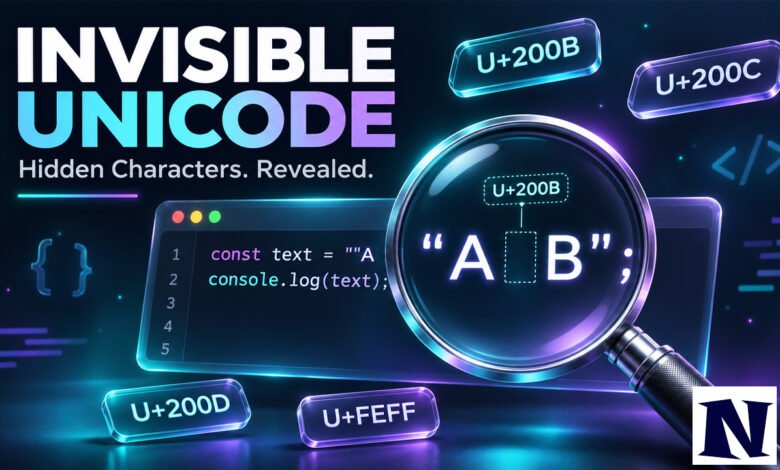
Invisible Unicode characters are real text characters that take up no visible space or produce no glyph on screen. They exist in the Unicode standard so software can control line breaks, join letters in certain scripts, or assemble emoji, yet they leave no mark for the human eye. People searching for “invisible Unicode” usually want to know how these characters work, why text can look normal but behave strangely, and how to spot or remove them.
These characters sit inside ordinary strings. They count toward length, survive copy-paste, and affect how programs process text, even though readers see nothing. Understanding them helps with everyday formatting problems, social media quirks, and occasional security issues.
What Is Invisible Unicode?
Invisible Unicode refers to code points that render with zero width or no visible glyph in common fonts. The most familiar example is the zero-width space (U+200B). It marks a possible line-break point without inserting a gap. Other characters control joining behavior, text direction, or math layout.
Unicode designed these characters for legitimate technical reasons. Scripts that do not use spaces between words (such as Thai or Khmer) need a way to signal word boundaries. Arabic and Persian text needs controls so letters join or stay separate correctly. Emoji sequences rely on joiners to combine multiple symbols into one glyph. When these characters appear outside their intended contexts, they create the effects people notice online.
Not every blank-looking character is the same. Some occupy width like a space but prevent line breaks. Others truly occupy zero width. The distinction matters when platforms filter or validate input.
Common Types of Invisible Unicode Characters
Several categories appear most often:
Zero-width space (U+200B) creates a break opportunity with no visual space. Zero-width non-joiner (U+200C) prevents letters from joining in scripts that connect. Zero-width joiner (U+200D) forces joining, which is how family and other compound emoji are built. Word joiner (U+2060) suppresses line breaks inside a sequence.
Hangul filler (U+3164) is a Korean letter-position placeholder that renders blank in most fonts yet counts as a letter rather than whitespace. Braille pattern blank (U+2800) produces an empty-looking cell. No-break space (U+00A0) looks like a regular space but keeps words on the same line. Soft hyphen (U+00AD) appears only when a line actually breaks at that point.
Bidirectional controls such as left-to-right mark (U+200E) and right-to-left override (U+202E) influence display order without drawing anything. Variation selectors and tag characters can also remain invisible while carrying data. Each type has a defined Unicode property and purpose.
Legitimate Uses of Invisible Unicode
These characters solve real typesetting and linguistic problems. In long URLs or unbreakable strings, a zero-width space lets the browser wrap the text cleanly without adding a visible gap. Persian writers insert zero-width non-joiners so compound words display with the correct letter shapes. Without them, the text becomes incorrect or hard to read.
Zero-width joiners power everyday emoji. A family emoji is not one character; it is several person and child symbols linked by joiners so the system draws a single combined glyph. Math notation uses invisible operators for spacing and semantics that should not appear on the page. Bidirectional marks keep mixed left-to-right and right-to-left text (English plus Arabic, for example) in the proper visual order.
Word processors and PDF tools insert soft hyphens or zero-width characters during layout. AI chat interfaces sometimes embed them for cursor tracking, and those characters can leak into copied replies. In each case the character performs a job that would be impossible with ordinary visible text alone.
How Invisible Unicode Appears in Everyday Text
Most people first meet invisible Unicode through copy-paste. Text copied from a word processor, PDF, or web page can carry zero-width spaces, soft hyphens, or non-breaking spaces that were never typed. The pasted result looks fine yet fails string comparisons, search, or form validation.
Social platforms and games have made the characters famous for blank usernames, empty bios, or empty-looking messages. Platforms that require at least one character often accept Hangul filler or similar letters, so a profile appears empty while still satisfying the rule. Messaging apps that block completely blank sends may accept a zero-width character, producing a message that looks empty to the recipient.
Developers encounter the characters when two strings that look identical fail equality checks, when filenames display one extension but contain another, or when code contains unexpected length. Editors that highlight non-ASCII or invisible characters make the problem obvious once the right setting is enabled.
Security Risks and Misuses of Invisible Unicode
The same invisibility that supports legitimate layout also enables misuse. Attackers insert zero-width characters to bypass simple keyword filters while keeping the visible text readable. Bidirectional overrides have been used in “Trojan Source” attacks so source code displays one way to a reviewer and executes differently. Filenames can be made to look like harmless documents while remaining executable.
In AI systems, invisible characters and variation selectors have been studied as ways to embed hidden instructions or alter tokenization without changing the visible prompt. Steganography techniques encode data by sequencing zero-width spaces and non-joiners so the payload travels inside ordinary text. Tracking or fingerprinting schemes can embed unique patterns of invisible characters that survive normal reading.
These risks do not mean every invisible character is malicious. Most occurrences are accidental formatting leftovers. The danger appears when the characters are placed deliberately to create a mismatch between what a human sees and what software processes.
How to Detect and Remove Invisible Unicode Characters
Detection starts with tools that reveal what the eye misses. Many modern code editors highlight zero-width and bidirectional characters by default. Online Unicode inspectors show every code point, its name, and its category. Command-line utilities such as hexdump or regular-expression searches can locate specific ranges.
A practical approach is to paste suspect text into an inspector that renders invisible characters as visible markers or boxes. Once identified, most can be removed with a find-and-replace or a sanitizer that strips format characters while preserving required joiners in multilingual text. Converting non-breaking spaces to ordinary spaces and deleting zero-width spaces usually restores expected behavior.
Care is needed. Removing every zero-width character will break correct Persian spelling and compound emoji. A targeted removal of U+200B, U+00A0, U+00AD, and stray bidirectional controls solves the majority of everyday problems without damaging legitimate content.
Interesting Facts About Invisible Unicode
The zero-width space has existed in Unicode since early versions and was originally intended for scripts without spaces. Hangul filler characters belong to the Korean compatibility block and were never meant as general-purpose blanks, yet they became popular for social-media use because many platforms treat them as letters rather than whitespace. The right-to-left override is one of the few characters that can reverse the display of subsequent text, which is why security researchers watch it closely.
Unicode contains dozens of characters that qualify as invisible or near-invisible across format, letter, and symbol categories. Their exact behavior depends on the font, the rendering engine, and the platform’s validation rules, so a character that works on one site may be stripped on another. AI-generated text has increased the accidental spread of these characters because chat interfaces sometimes inject them internally.
Conclusion
Invisible Unicode characters are ordinary parts of the Unicode standard that perform layout, linguistic, and semantic jobs without appearing on screen. They explain why some text looks normal yet behaves oddly, why blank profiles exist on certain platforms, and why developers occasionally spend time chasing “identical” strings that refuse to match. Most encounters are harmless formatting artifacts. A smaller number involve deliberate misuse for filtering, display tricks, or hidden data.
Knowing the common code points, their legitimate purposes, and simple detection methods removes the mystery. When text acts strangely, checking for invisible characters is a quick and reliable next step.
Frequently Asked Questions
What is the most common invisible Unicode character?
The zero-width space (U+200B) is the one people meet most often. It creates a line-break opportunity without adding visible space and frequently arrives through copy-paste from documents or web pages.
Can invisible Unicode characters hide messages?
Yes. Sequences of zero-width spaces and non-joiners can encode binary data, and tag characters can carry hidden letters. These techniques are used in steganography and have been studied in AI prompt contexts.
Why do some usernames look completely blank?
Platforms that require at least one character often accept Hangul filler (U+3164) or similar letters. The character satisfies the rule yet renders as nothing, producing an empty-looking name or bio.
Are invisible characters dangerous?
Most are harmless leftovers from formatting. Deliberate use of bidirectional overrides or filter-bypass sequences can create security issues, so software that processes untrusted text should normalize or inspect these characters.
How do I remove them from a document?
Paste the text into a Unicode inspector, identify the unwanted code points, then delete or replace them. Many editors and online cleaners can strip common zero-width and non-breaking characters in one step while leaving required script joiners intact.
See more amazing Information visit Novira Magazine