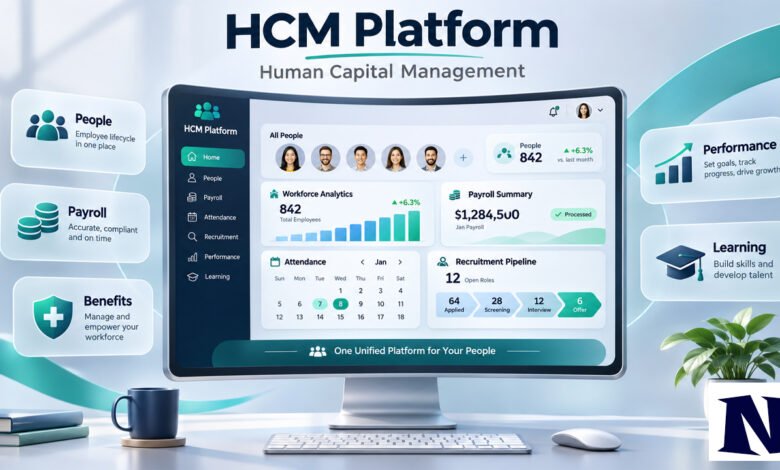
An HCM platform is cloud-based software that helps organizations manage the full employee lifecycle in one place. It covers recruiting, onboarding, payroll, benefits, performance, learning, time tracking, and workforce analytics. Instead of using separate tools for each HR task, companies rely on a single HCM platform as the central system of record for people data.
Businesses choose an HCM platform when they need more than basic record-keeping. The software turns routine HR work into connected processes that support hiring, retention, compliance, and long-term workforce planning. Most modern platforms run in the cloud and include self-service tools for employees and managers along with reporting features for leaders.
What Is an HCM Platform?
Human capital management (HCM) refers to both the strategy and the technology used to attract, manage, develop, and retain employees. An HCM platform is the technology side: an integrated suite of applications that supports these activities from hire to retire.
Unlike older systems that mainly stored employee records, today’s HCM platforms connect operational tasks such as payroll and time tracking with strategic functions such as talent development and workforce planning. The goal is a single source of accurate people data that different teams can use without constant manual updates or conflicting spreadsheets.
Most organizations treat the HCM platform as the foundation for HR operations. Modules share the same employee database, so a change made in one area (for example, a new hire’s start date or a benefits election) updates related processes automatically.
Key Features of an HCM Platform
A full HCM platform typically includes several core modules. These usually cover:
- Core HR and employee records
- Recruiting and onboarding
- Payroll and tax compliance
- Benefits administration
- Time, attendance, and absence management
- Performance management and goals
- Learning and development
- Compensation planning
- Workforce planning and analytics
- Employee and manager self-service
Exact features vary by vendor and company size. Larger platforms often add AI tools for screening candidates, suggesting learning content, or forecasting turnover. Many also include mobile apps so employees can view pay stubs, request time off, or complete training from a phone.
The shared data model is what separates a true HCM platform from a collection of point solutions. When modules run on the same database, reports stay consistent and processes flow without repeated data entry.
Benefits of Using an HCM Platform
Companies adopt an HCM platform mainly to reduce administrative work and improve decision-making. Automation handles routine tasks such as calculating overtime, processing benefits changes, or routing approval workflows. This frees HR teams to focus on hiring quality candidates and supporting managers.
Centralized data improves accuracy. Payroll errors drop when time-worked information flows directly into the pay calculation. Compliance becomes easier because the system can apply the correct rules for different locations and flag missing documents or expired certifications.
Employee experience also improves. Self-service portals let people update personal information, enroll in benefits, or check schedules without calling HR. Managers gain visibility into team performance and headcount needs through dashboards rather than waiting for monthly reports.
Organizations that connect people data to finance and planning systems often see better alignment between workforce costs and business goals. Real-time insights help leaders adjust staffing levels or compensation plans more quickly when conditions change.
HCM Platform vs HRIS and HRMS
The terms HRIS, HRMS, and HCM platform are sometimes used interchangeably, but they describe different levels of capability.
An HRIS mainly stores and reports on employee data. It handles core records, basic organizational charts, and simple reporting.
An HRMS adds operational tools such as payroll processing, time tracking, benefits administration, and basic talent processes on top of the HRIS foundation.
An HCM platform is the broadest. It includes the functions of an HRIS and HRMS while adding strategic capabilities such as advanced talent management, succession planning, skills analytics, and workforce forecasting. Modern HCM platforms are almost always cloud-based and designed to support larger or more complex organizations.
Many vendors market their products under more than one label. The practical test is the range of modules and whether they share a single data model.
How an HCM Platform Works
An HCM platform starts with a central employee database. When a candidate is hired, their information moves from the recruiting module into core HR. From there, the same record feeds payroll setup, benefits enrollment, learning assignments, and performance goals.
Workflows connect the steps. An approved leave request can update the attendance system and adjust the next payroll automatically. A completed training course can appear on the employee’s skills profile and influence succession plans.
Managers and employees interact through portals or mobile apps. HR administrators configure rules, run reports, and maintain compliance settings. Leadership uses analytics dashboards to view headcount, turnover trends, labor costs, and skills gaps.
Most platforms offer APIs and pre-built connectors so the HCM system can exchange data with finance, ERP, or other business tools. Security controls manage who can see or change specific information.
Popular HCM Platforms
Several well-known vendors offer HCM platforms. Workday, SAP SuccessFactors, Oracle Fusion Cloud HCM, UKG, ADP, and Dayforce are frequently mentioned for mid-size and enterprise organizations. Each has different strengths.
Workday is often chosen by companies that want HR and finance on the same data model. SAP SuccessFactors and Oracle Cloud HCM appeal to organizations already using those vendors’ other enterprise systems. UKG and Dayforce are commonly selected by companies with large hourly or shift-based workforces that need strong scheduling and time-tracking tools. ADP remains widely used for its payroll expertise and service support.
Smaller or growing companies sometimes start with platforms such as Rippling, HiBob, or BambooHR that combine core HR with payroll and basic talent features. The best choice depends on company size, number of countries, payroll complexity, and existing technology.
Implementing an HCM Platform
Successful implementation usually begins with a clear picture of current processes and pain points. Organizations map what they do today for hiring, payroll, time tracking, and performance, then decide which areas the new platform must handle.
Data cleanup is critical. Employee records, organizational structures, and historical payroll data must be accurate before migration. Most vendors provide implementation partners or prescribed methodologies, especially for larger projects.
Training covers different audiences: HR administrators learn configuration, managers learn approval workflows, and employees learn self-service. A phased rollout is common—core HR and payroll first, then talent modules later—to reduce risk.
Change management matters as much as technology. People need to understand why the new system is better and how their daily tasks will change. Ongoing support and regular configuration reviews help the platform stay aligned with business needs after go-live.
Challenges When Choosing an HCM Platform
Selecting and running an HCM platform involves trade-offs. Implementation time and cost can be significant, especially for global organizations that need local payroll rules and language support. Some projects take many months and require dedicated internal teams plus external partners.
Integration with existing systems is another common issue. Even platforms with strong APIs may need custom work to connect cleanly with older finance or operational tools. Data privacy and security requirements differ by country and industry, so compliance features must be verified carefully.
User adoption can lag if the interface feels complicated or if training is incomplete. Organizations sometimes discover after purchase that a module they expected is limited or requires additional licensing. Clear requirements and proof-of-concept testing help reduce these surprises.
Pricing is usually quote-based and depends on employee count, modules, and service level. Total cost includes software, implementation, ongoing support, and any third-party integrations.
The Future of HCM Platforms
HCM platforms continue to add artificial intelligence and automation. Many now include AI-assisted recruiting, skills recommendations, predictive analytics for attrition, and chat-style interfaces that answer common employee questions. Some vendors are introducing agent-style tools that can initiate or complete multi-step processes within approved rules.
Skills data is becoming more important. Platforms are moving beyond job titles to track what employees can actually do, which supports internal mobility and workforce planning as roles change. Integration between people data and business planning systems is also tightening so leaders can see the cost and capacity impact of hiring or reorganization decisions in near real time.
Cloud delivery remains standard. Most organizations prefer subscription models that include regular updates rather than managing on-premise servers.
Interesting Facts About HCM Platforms
The HCM software market is large and growing. One industry report noted that nearly two million U.S. companies already spend billions annually on these solutions, with further growth expected as more organizations move from spreadsheets or basic tools.
Many platforms now support contingent and contractor workforces alongside full-time employees, reflecting changes in how companies staff projects. Mobile usage is high; employees frequently access pay, schedules, and time-off tools from phones.
Vendor definitions of “HCM platform” still differ. Some emphasize the breadth of talent modules, while others highlight real-time payroll calculation or workforce management depth. Buyers usually need to review actual module lists and data models rather than relying only on marketing labels.
Conclusion
An HCM platform gives organizations one connected system for managing employees from the moment they apply until they leave. By combining core HR, payroll, talent processes, and analytics on a shared data foundation, it reduces manual work, improves data accuracy, and supports better workforce decisions. The right platform depends on company size, complexity, and priorities. Careful planning, clean data, and attention to user adoption determine how much value the system delivers after implementation.
FAQs
What is the main purpose of an HCM platform?
An HCM platform centralizes employee data and automates processes across the full employee lifecycle so HR teams can handle recruiting, pay, development, and planning in one system instead of many disconnected tools.
How is an HCM platform different from a basic HR system?
A basic HR system mainly stores records. An HCM platform adds payroll, talent management, learning, analytics, and workforce planning, and connects those functions through shared data.
Do small companies need an HCM platform?
Small companies often start with lighter HR and payroll tools. As headcount, locations, or compliance needs grow, many move to a fuller HCM platform that can scale with them.
How long does it take to implement an HCM platform?
Implementation time varies widely. Simple deployments for mid-size companies may take a few months, while large global projects with complex payroll and integrations can take a year or longer.
Can an HCM platform work with existing finance software?
Most modern HCM platforms offer APIs and connectors for finance and ERP systems. The ease of integration depends on the specific products and how much custom work is required.
See more amazing Information visit Novira Magazine