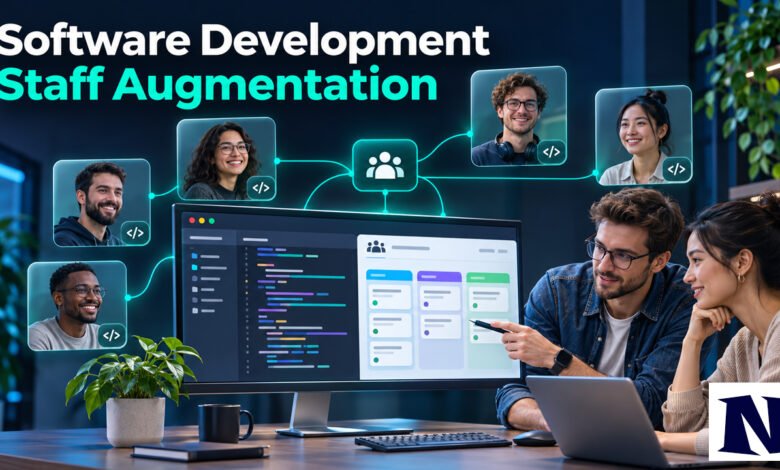
Companies turn to software development staff augmentation when they need extra developers or specialists but want to keep control of their product and processes. It lets a team add experienced people on a contract basis without the long process of permanent hiring or the loss of control that comes with full project outsourcing.
The model is straightforward. External engineers join the existing team, follow the same tools and meetings, and report to the client’s managers. The provider handles recruitment, employment, and payroll. This approach has become common for filling skill gaps or handling temporary increases in workload while the core team stays in charge of priorities and architecture.
What Software Development Staff Augmentation Means
Software development staff augmentation is a hiring model in which a company brings external developers, testers, DevOps engineers, or other technical specialists into its existing team on a temporary or ongoing contract. These people work under the client’s direction. They attend the same stand-ups, use the same repositories and tools, and follow the same coding standards as internal staff.
The client retains day-to-day control over tasks, priorities, and technical decisions. The augmentation provider recruits and vets candidates, employs them, and manages payroll and compliance. This differs from project outsourcing, where a vendor takes ownership of delivery for a defined scope. It also differs from permanent hiring, which involves longer recruitment, benefits, and long-term employment commitments.
Typical roles include senior backend or frontend developers, QA automation engineers, cloud specialists, and technical leads. Engagements can last a few months or extend for a year or more, depending on the need.
How Software Development Staff Augmentation Works
The process usually begins with a clear definition of the role. The client specifies the required skills, seniority level, tech stack, expected duration, and any time-zone or language preferences. The provider then shortlists vetted candidates from its talent pool, often within a few days.
The client interviews the candidates and selects the best fit. Once approved, onboarding starts. Access to repositories, documentation, and communication tools is granted, and the new engineer joins the team’s regular meetings. Many providers offer a short trial period so both sides can confirm the match before a longer commitment.
After onboarding, the augmented engineer works like any other team member. The client’s engineering manager assigns work, reviews code, and tracks progress. The provider remains available for replacement if the fit is poor. Scaling is flexible: the client can add more people when workload increases or reduce numbers when a project phase ends.
Benefits of Software Development Staff Augmentation
Speed is one of the clearest advantages. Traditional hiring for senior developers often takes several months. With staff augmentation, companies can often have a vetted engineer starting within one to two weeks once the role is defined.
Companies also gain access to specialized skills that may be scarce in their local market. This includes expertise in areas such as specific cloud platforms, AI-related tooling, or niche frameworks. Because the people remain under client management, product knowledge and architectural decisions stay inside the organization.
Cost structures are usually more predictable for temporary needs. The client pays a contract rate rather than salary, benefits, recruiting fees, and equipment. Flexibility to increase or decrease team size without permanent headcount changes is another practical benefit. Many teams use it to protect permanent staff from overload during peak periods.
Software Development Staff Augmentation Compared With Other Models
Staff augmentation differs from full project outsourcing in a fundamental way. In augmentation, the client manages the work and owns the outcome. In outsourcing, the vendor manages delivery and is responsible for the agreed result. Augmentation suits teams that already have strong technical leadership and want to keep control of the codebase and roadmap.
Compared with permanent hiring, staff augmentation is faster to start and easier to stop. Permanent roles make more sense for core, long-term capabilities that shape the product’s foundation. A dedicated team model sits between the two: the provider may handle more of the day-to-day coordination, while the client still sets overall direction. The right choice depends on whether the need is a specific skill gap, ongoing capacity, or a fully scoped project.
When to Use Software Development Staff Augmentation
This model works well when a company has clear technical direction and internal leads but needs extra capacity or a scarce skill for a defined period. Common situations include scaling for a major release, covering a temporary absence, adding expertise in a new technology, or handling a short-term spike in work.
It is less suitable when the organization lacks the management bandwidth to direct the work or when the requirement is a complete, well-defined project that can be handed off. Teams that treat augmented engineers as full participants—same meetings, same standards, same access—usually see better results than those that keep them at arm’s length.
Costs and Pricing Considerations
Rates vary by location, seniority, and specific skills. Onshore talent in higher-cost markets is typically more expensive than nearshore or offshore options. Providers generally charge on an hourly or monthly basis per engineer. The rate usually covers the engineer’s compensation, benefits where applicable, recruiting, and the provider’s margin.
Beyond the headline rate, companies should account for internal management time and any ramp-up period while the engineer learns the codebase. Total cost is often lower than a fully loaded permanent hire for temporary or specialized needs, especially when recruitment fees, benefits, and equipment are considered. Exact figures depend on the market and the role, so most companies request detailed quotes after defining their requirements.
Best Practices for Software Development Staff Augmentation
Clear role definitions before interviewing reduce mismatches. Many teams start with a short paid trial to confirm technical skill and working style. Onboarding should include the same access, documentation, and introduction to processes that a new permanent hire would receive.
Consistent communication helps. Engineers who join the regular stand-ups and code reviews integrate faster. Security practices matter: non-disclosure agreements, least-privilege access, and clear rules for handling company systems are standard. Regular feedback and performance check-ins, along with a replacement clause in the contract, help maintain quality.
Common Challenges and Practical Ways to Address Them
Integration can take longer if access is delayed or documentation is incomplete. Preparing repositories, environments, and a first set of tasks before the engineer starts reduces this friction. Communication gaps appear more often when time-zone overlap is limited; many successful engagements require several hours of shared working time each day.
Knowledge transfer is another point to plan. Because the engagement is often temporary, documenting decisions and pairing augmented engineers with permanent staff helps retain knowledge inside the team. Cultural and process fit improve when the same standards and tools are applied to everyone.
Conclusion
Software development staff augmentation gives companies a practical way to add skilled people while keeping control of their product and processes. It is most useful for teams that already have technical leadership and need extra capacity or specialized skills without long-term hiring commitments. Success depends on clear requirements, solid onboarding, and treating the added engineers as part of the team rather than outsiders. When those conditions are met, the model can shorten delivery timelines and reduce the overhead of permanent recruitment for temporary needs.
FAQs
What is the main difference between staff augmentation and project outsourcing?
In staff augmentation the client manages the daily work and owns the outcome. In project outsourcing the vendor manages delivery and is accountable for the agreed result.
How quickly can a company start with software development staff augmentation?
Many providers present candidates within days and can have an approved engineer onboarded in one to two weeks once the role is clearly defined.
Does the client keep intellectual property rights?
Yes. The client normally retains ownership of the code and intellectual property created during the engagement, with appropriate contract clauses confirming this.
When is permanent hiring better than staff augmentation?
Permanent hiring is usually preferable for core roles that require deep institutional knowledge, long-term architectural ownership, or ongoing leadership within the product team.
What should a company check before choosing a provider?
Look for proven vetting processes, references from similar projects, clear replacement policies, and solid security practices. A short trial period is also useful before a longer commitment.
See more amazing Information visit Novira Magazine