MVP Development: How Startups Build and Test Products Without Wasting Time or Money

Many founders waste months and large budgets building features nobody wants. MVP development solves this by focusing on the smallest version of a product that can still be tested with real users. The goal is simple: learn what works and what does not before investing heavily.
This approach helps teams validate ideas quickly, collect honest feedback, and reduce the risk of building something that fails in the market. Companies of all sizes use it, but startups benefit most because their resources are limited.
What Is MVP Development?
MVP stands for Minimum Viable Product. It is the simplest version of a product that solves a core problem for early users. It is not a half-finished app or a rough prototype. It is a working product with only the essential features needed to start learning from real people.
The idea comes from lean startup methods. Instead of guessing what customers want, teams release a basic product, watch how people use it, and improve based on actual behavior. This cycle of building, measuring, and learning continues until the product fits the market.
MVP development is different from traditional software development. Traditional projects often try to deliver a complete product on the first launch. MVP development accepts that the first version will be incomplete and treats that as a feature, not a flaw. The focus stays on speed and learning rather than perfection.
Why MVP Development Matters
Building a full product before knowing if anyone needs it is expensive. Development costs, marketing, and team salaries add up quickly. Many startups run out of money before they discover that their main idea does not solve a real problem.
MVP development lowers this risk. Teams can test assumptions with a small budget. If users show interest, the company continues. If they do not, the team can change direction or stop without losing everything. This saves both money and time.
It also speeds up learning. Real users reveal problems that internal teams miss. Their feedback is more useful than opinions from friends or surveys. Companies that launch early often reach product-market fit faster than those that wait for a polished version.
Investors also prefer teams that have tested ideas with real customers. An MVP with some user data is stronger than a detailed business plan alone. It shows that the founders understand their market and can execute.
Key Steps in the MVP Development Process
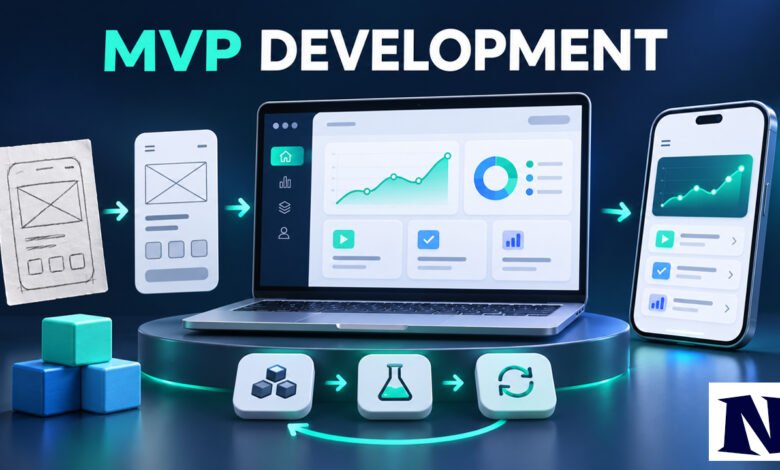
The process begins with identifying the main problem you want to solve. Write down who faces this problem and how they currently deal with it. Avoid listing features at this stage. Focus only on the pain point.
Next, define the smallest set of features that address this problem. Remove anything that is not essential for the first version. Many teams struggle here because they want to add extra functions. Keep the list short.
After defining features, design the user flow. Sketch how a person will move through the product from start to finish. Simple wireframes are enough. The goal is clarity, not visual polish.
Then choose how to build it. Some teams write code from scratch. Others use no-code tools or existing platforms to move faster. The method matters less than the speed of learning. Once the basic product is ready, release it to a small group of users.
Finally, measure results and decide what to do next. Track actions such as sign-ups, usage time, and feedback. Use this data to improve the product, add features, or change the idea entirely. Repeat the cycle.
Choosing the Right Features for Your MVP
Selecting features is one of the hardest parts of MVP development. Start by listing every idea, then cut aggressively. Ask whether each feature is required for the user to experience the core value. If the answer is no, leave it out for now.
Focus on one primary job the product must do. For example, a delivery app MVP might only handle ordering and basic tracking. Payment options, loyalty points, and multiple cuisines can wait. Adding too many features early creates complexity and slows testing.
Talk to potential users before building. Short interviews or surveys help confirm which problems matter most. Their answers often differ from what founders assume. Use this input to prioritize.
It is also useful to think about the opposite: what you will not build. Document these decisions so the team stays focused. Later versions can include the missing pieces once you know they are needed.
Common Challenges in MVP Development
Many teams overbuild their MVP. They add features because they feel the product looks incomplete. This delays launch and increases costs. The solution is to set a strict feature limit before development starts and stick to it.
Another problem is choosing the wrong users for testing. Friends and family often give polite feedback that does not reflect real demand. Reach people who actually experience the problem you want to solve. Their reactions are more honest.
Technical debt can also appear quickly. Building fast sometimes means taking shortcuts that create problems later. Balance speed with basic code quality. Plan to clean up the most important parts after the first learning cycle.
Finally, some founders fear negative feedback. They delay release to avoid criticism. This fear usually costs more than early criticism. Treat negative comments as data, not personal attacks.
Best Practices for Successful MVP Development
Start with a clear hypothesis. Write down what you expect users to do and why. This makes it easier to judge whether the MVP succeeded or failed. Vague goals lead to unclear results.
Keep the team small during the first version. Fewer people mean faster decisions and less coordination. Many successful MVPs were built by two or three people.
Release to a limited audience first. This reduces risk if major problems appear. You can fix issues before more people see the product. Use simple channels such as email lists, social groups, or existing customers.
Measure behavior, not just opinions. People often say they like something but do not use it. Track what they actually do. Actions such as repeated use or referrals are stronger signals than survey answers.
Plan the next steps before launch. Decide in advance what results will lead to more investment, a pivot, or stopping. This prevents emotional decisions after the data arrives.
Tools and Approaches for Building an MVP
Teams have several options depending on their skills and budget. Custom code gives full control but takes more time. It works well when the idea needs unique functionality that existing tools cannot provide.
No-code and low-code platforms let non-technical founders build working products quickly. These tools handle databases, user accounts, and basic interfaces. They are useful for testing ideas before hiring developers.
Existing platforms can also serve as an MVP. For example, a marketplace idea might start as a simple group or spreadsheet plus manual work. This approach costs almost nothing and tests demand immediately.
Outsourcing parts of the work is another common path. Many companies hire freelancers or agencies for the first version while the founding team focuses on users and strategy. Clear requirements help avoid miscommunication.
The best choice depends on the problem, timeline, and available skills. Speed of learning usually matters more than the specific technology.
Measuring Results After Launch
Define success before users see the product. Common metrics include number of active users, retention after one week, and whether people complete the main action. Choose two or three numbers that match your hypothesis.
Collect both quantitative and qualitative data. Analytics show what happens. Conversations and support messages explain why it happens. Both are needed.
Watch for early signs of real demand. People who return without reminders, share the product, or ask for more features usually indicate a strong fit. Silence or one-time use often means the problem is not urgent enough.
Review the data on a fixed schedule. Weekly checks work for most early products. Compare results against your original hypothesis and decide the next action. Avoid changing the product daily based on every comment.
If results are weak, consider small changes first. Sometimes a clearer message or simpler flow improves results without rebuilding everything. Larger pivots make sense only after several learning cycles.
Conclusion
MVP development helps teams test ideas with real users before committing large resources. It reduces risk, speeds up learning, and improves the chances of building something people actually want. The process requires discipline to keep features minimal and willingness to act on feedback.
Success depends on clear goals, careful feature selection, and honest measurement. Teams that treat the first version as a learning tool rather than a final product usually move faster and waste less money. Start with the core problem, release a simple solution, and improve based on what users do.
Frequently Asked Questions
What is the main goal of MVP development?
The main goal is to test whether a product idea solves a real problem for real users with the least amount of time and money. It focuses on learning rather than delivering a complete product.
How long does it usually take to build an MVP?
Many teams finish a basic version in four to twelve weeks. The exact time depends on the complexity of the core features and the skills of the people building it.
Is MVP development only for software products?
No. The same idea works for physical products, services, and other businesses. The principle is to create the smallest testable version that delivers core value.
What happens after the MVP is launched?
Teams measure user behavior, collect feedback, and decide whether to improve the current product, change direction, or stop. The process continues with new versions based on what was learned.
Can a non-technical founder build an MVP?
Yes. No-code tools, templates, and freelance developers make it possible for people without coding skills to create and test a basic product. Many successful companies started this way.
See more amazing Information visit Novira Magazine