SaaS Security: Essential Guide to Protecting Your Business Applications in 2026

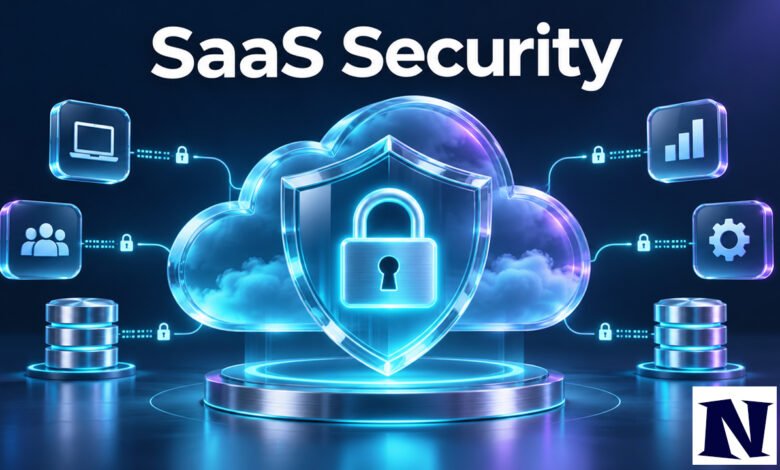
Businesses rely on dozens of software-as-a-service tools for email, collaboration, customer data, and operations. SaaS Security covers the practices and controls needed to protect data, user access, configurations, and integrations inside these cloud applications. It answers the core question of how organizations keep sensitive information safe when they do not control the underlying infrastructure.
Most risks come from customer-side issues rather than platform failures. Stolen credentials, misconfigured sharing settings, over-permissioned integrations, and shadow applications create the majority of incidents. Understanding SaaS Security helps teams reduce exposure without slowing daily work.
What Is SaaS Security?
SaaS Security is the set of policies, processes, and tools that protect an organization’s data, identities, permissions, and connected applications within software hosted by third-party vendors. Common examples include Microsoft 365, Google Workspace, Salesforce, Slack, and Snowflake.
Unlike traditional on-premises security, teams do not manage servers or patch operating systems. They focus on who can sign in, what data can be shared, which third-party apps hold tokens, and whether settings match secure baselines. The practice covers both sanctioned applications approved by IT and unsanctioned ones adopted by employees.
Effective programs combine visibility, access controls, continuous monitoring, and response capabilities. They treat each SaaS tenant as its own security boundary with unique admin consoles, local accounts, and audit logs.
Why SaaS Security Matters for Businesses
Organizations now run core processes through SaaS platforms. A single compromised account or misconfigured sharing link can expose customer records, intellectual property, or financial data across the company. Recent surveys show that the vast majority of organizations experienced at least one SaaS or AI-related security incident in the past year.
The average cost of a data breach continues to climb, and recovery often takes months. Beyond direct losses, incidents damage customer trust and trigger regulatory scrutiny. As remote and hybrid work continues, more employees access these tools from personal devices and networks, expanding the attack surface.
Investing in SaaS Security also supports business goals. Strong controls help win enterprise deals, meet compliance requirements, and enable safer adoption of new AI features inside existing applications.
Common Threats and Risks in SaaS Security
Attackers rarely break into the SaaS platform itself. They use valid access paths created by weak identity practices, configuration drift, and unmanaged integrations.
Stolen credentials remain the top entry point. Infostealer malware on unmanaged devices captures passwords and session cookies that are later sold and reused. Phishing-resistant multi-factor authentication reduces this risk but does not eliminate token theft or session hijacking.
Over-scoped OAuth integrations and third-party apps create another major vector. A compromised vendor token can grant broad access to multiple customer tenants. Consent phishing tricks users into approving malicious applications that request excessive permissions.
Misconfigurations and configuration drift are widespread. Default settings often allow public sharing or overly broad admin rights. Once changed, settings can drift back without continuous checks. Shadow SaaS and shadow AI further complicate visibility when employees adopt tools outside official approval processes.
Non-human identities such as API keys, service accounts, and AI agents multiply the problem. These identities often hold long-lived credentials with more privileges than needed.
The Shared Responsibility Model
The shared responsibility model defines clear boundaries between the SaaS provider and the customer. Providers secure the underlying infrastructure, platform availability, core application code, and physical data centers. Customers own identity and access management, data classification and sharing, tenant configurations, third-party integrations, and compliance for their own use.
This split means customers cannot assume the vendor handles everything. If a team can change a setting or grant a permission, that team is responsible for securing it. Many incidents occur because organizations misunderstand these boundaries and leave identity, sharing, or integration controls unaddressed.
Practical application involves inventorying every application, assigning owners, establishing secure baselines, and regularly reviewing privileges and connected apps. Backup and recovery of customer data also typically fall to the customer side.
Best Practices for Strong SaaS Security
Start with complete inventory. Combine single sign-on logs, OAuth consent records, expense reports, and network data to find both sanctioned and shadow applications. Assign a business owner and technical responder to each high-risk app.
Enforce strong authentication. Require phishing-resistant multi-factor authentication, preferably with passkeys or hardware keys for administrators. Disable legacy authentication protocols and local sign-in where single sign-on is available. Apply least privilege so users and agents receive only the access they need for their roles.
Control integrations carefully. Review OAuth scopes before approval, require admin consent for high-privilege grants, and revoke unused tokens. Store API keys in a secrets vault and rotate them on a schedule.
Harden configurations against known baselines such as CISA’s SCuBA recommendations for Microsoft 365 or CIS benchmarks. Monitor for drift and remediate promptly. Enable detailed audit logging and stream logs to a central system for detection and investigation.
Finally, maintain tested recovery processes. Know how to revoke sessions, export essential data, and operate during an outage or compromise.
SaaS Security Tools and Solutions
Traditional network-based tools provide limited visibility inside SaaS tenants. Specialized solutions address this gap.
Cloud Access Security Brokers (CASBs) sit in the traffic path or use APIs to discover shadow IT, enforce data loss prevention policies, and control access. SaaS Security Posture Management (SSPM) platforms connect directly via APIs to continuously scan configurations, permissions, and integrations inside sanctioned applications. They detect misconfigurations and support automated remediation.
Many organizations combine both approaches. CASBs handle data movement and unsanctioned app risks, while SSPM focuses on the internal posture of approved tenants. Identity providers, security information and event management systems, and data security posture management tools add further layers.
Emerging capabilities also cover AI agents and non-human identities by inventorying their permissions and actions.
Compliance and Regulations for SaaS
Frameworks such as SOC 2, ISO 27001, GDPR, HIPAA, and industry-specific rules require organizations to demonstrate control over data in SaaS environments. Customers remain responsible for mapping tenant settings and access practices to these requirements even when the provider holds certifications.
Auditors look for evidence of inventory, least-privilege access, logging, vendor risk management, and incident response. Regular reviews of sharing settings, integration scopes, and admin roles help maintain compliance. Data residency and retention policies must also align with contractual and regulatory obligations.
AI and Emerging Challenges in SaaS Security
AI features inside SaaS applications introduce new risks. Agents can inherit broad user permissions, process sensitive data, and take automated actions. Prompt injection through documents or records can manipulate agent behavior. Shadow AI occurs when employees paste confidential information into consumer tools or connect personal AI accounts.
Organizations need to inventory AI capabilities and non-human identities, apply least privilege to agents, monitor data flows into models, and log agent actions for detection. Testing for prompt injection and excessive agency before deployment reduces exposure.
As AI adoption accelerates, the distinction between traditional SaaS security and AI security continues to blur.
Conclusion
SaaS Security is now a core operational requirement rather than an optional layer. Most breaches stem from identity weaknesses, configuration issues, and unmanaged integrations that sit on the customer side of the shared responsibility model. By building accurate inventories, enforcing strong authentication and least privilege, monitoring posture continuously, and preparing for AI-related risks, organizations can significantly reduce exposure while continuing to benefit from cloud applications. Consistent execution of these fundamentals produces better results than any single tool.
FAQs
What is the biggest SaaS Security risk today?
Stolen credentials combined with misconfigured sharing settings and over-permissioned integrations represent the most common paths to compromise. Platform-level vulnerabilities are rare by comparison.
Does the SaaS provider handle all security?
No. Providers secure the infrastructure and platform. Customers remain responsible for identities, data sharing, configurations, and third-party connections.
What is the difference between SSPM and CASB?
SSPM focuses on continuous configuration and permission checks inside sanctioned applications via APIs. CASB primarily controls data movement and discovers unsanctioned apps through traffic or API monitoring.
How often should SaaS configurations be reviewed?
High-risk applications should be checked continuously or at least weekly against secure baselines. Lower-tier apps can follow monthly or quarterly cycles.
Is multi-factor authentication enough for SaaS Security?
Multi-factor authentication is essential but insufficient alone. Organizations also need least privilege, integration reviews, configuration monitoring, and session controls to address token theft and other post-authentication risks.
See more amazing Information visit Novira Magazine