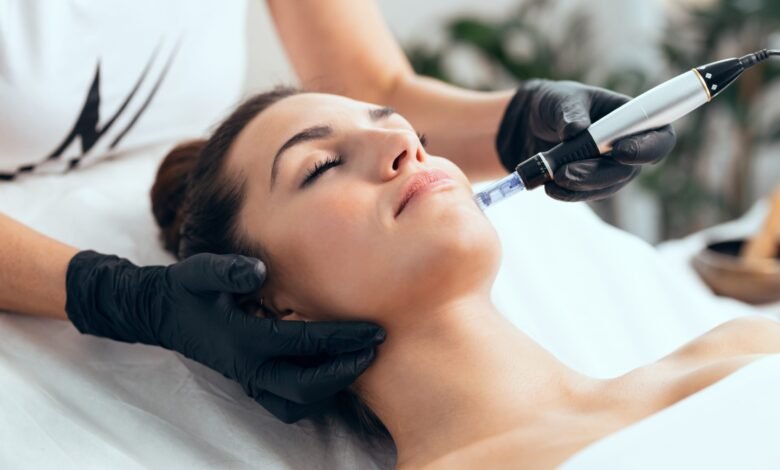
Most clinics today include microneedling in their lists of available treatments. Now that we know that controlled dermal injury does cause collagen remodeling, the real clinical questions are how to best match a device to a treatment plan, what depths and treatment intervals to use and how to set appropriate patients’ expectations before actually treating them.
From screening through to the months following treatment, a series of decisions are made by the practitioner, many of which are critical to achieving good outcomes and preventing poor ones.
Screening decides more than technique
To avoid unwanted side effects and to achieve the best results it is very important to filter out unsuitable cases in a thorough pre-treatment consultation. Active acne, Herpes simplex (without adequate prophylaxis), a history of keloid formation and recent use of isotretinoin are all examples of cases where treatment with microneedling would not be advisable and could potentially result in poor results or in adverse effects. Unless realistic objectives are set for each individual treatment session (e.g. Moderate to deep ice pick scarring will not typically be resolved with three sessions of moderate depth microneedling) then it would be unwise to treat this patient with microneedling.
The review of a patient’s current medications and supplements is also of significance to prevent any increased risk of bruising. Conditions such as autoimmune disease and poor diabetic control also need to be managed prior to treatment. Occasionally, a physician may need to be consulted and sign off for treatment.
Fitzpatrick type and pigment risk
The risk of post-inflammatory hyperpigmentation (PIH) of higher Fitzpatrick skin types can be significantly reduced by performing a conservative first treatment session, treating the skin with a pigment stabilizing product 2-4 weeks prior to treatment, and ensuring patients avoid the sun strictly for a number of weeks post-treatment. Documenting a baseline photograph of a patient’s pigment with standardized photographs can also serve to prove that any darkening of the skin that a patient claims has occurred as a result of treatment was already present prior to it.
Preparing skin in the two weeks before
Preparation of the skin is largely removal of products that can irritate the skin and the breakdown of the skin’s barrier. This means retinoids, exfoliating products containing alpha-hydroxy acids (AHAs) or beta-hydroxy acids (BHAs), and benzoyl peroxide should be discontinued 3-5 days prior to treatment. Removal of hair in the treatment area by waxing, sugaring, tweezing, using depilatory creams, etc. Should be carried out at least 2 weeks prior to treatment, as well as avoidance of laser hair removal in the same area, and chemical peels.
- Stop topical retinoids and acids three to five days before treatment
- Avoid sun exposure and self-tanner for at least a week
- Begin antiviral prophylaxis the day before for patients with a cold sore history
- Postpone if there is active infection, an open lesion, or sunburn in the treatment zone
- Arrive with clean skin and no makeup where possible
Timing around events
New patients often book for treatments in the lead up to special events, weddings, school photos, conferences etc. Make sure to have your final treatment session at least 3 weeks prior to any events where redness may cause problems. Also allow 6 weeks from starting treatment to the set of dates for special events.
What the session involves
Topical anesthetic is applied 20-30 minutes prior to treatment. Depending on the area to be treated the depth will vary. Forehead and eye area are treated with shallow needles whereas cheeks and scarring are treated with deeper needles. End point for dermal needling is an even erythema with slight pinpoint bleeding in the deeper layers of skin.
For a full-face treatment, expect approximately 30 to 45 minutes of actual work. When comparing clinics that offer SkinPen microneedling near me, it is worth asking how depth is adjusted from zone to zone, because sensation ranges from a slight vibration to a scratching feeling over bony areas of the face, and patients who have had fractional laser generally find microneedling a lot more bearable.
Comparing common protocols
| Concern | Typical depth | Sessions | Interval |
| Texture and pore size | 0.5 to 1.0 mm | 3 | 4 weeks |
| Fine lines, early laxity | 1.0 to 1.5 mm | 3 to 4 | 4 to 6 weeks |
| Atrophic acne scarring | 1.5 to 2.5 mm | 4 to 6 | 6 weeks |
| Stretch marks, body | 1.5 to 2.5 mm | 4 to 6 | 6 to 8 weeks |
Downtime and the aftercare window
Day one looks like sunburn. The skin feels warm and tight. By day two, the redness has faded to a pink hue and by day three the skin looks fine and is ready to wear makeup. Deeper work on body areas can take 5 days to fully flush and then look peeled and rough for up to 5 days.
Keep aftercare simple. Use a gentle cleanser and either a bland occlusive or your prescribed post-treatment product for 72 hours. Avoid using any active products, exfoliating between treatments or for 48 hours after, sweating, swimming, or pulling off any flaky skin.
Sun protection as part of the result
Post treatment, protect newly formed collagen from all UV light for at least 3 weeks by applying mineral SPF 30 or higher throughout the day and reapplying as needed. Protect your skin from the sun with hats, shades and seek shade to prevent UV from weakening the dermal matrix and driving further pigmentation.
Judging provider quality
Devices are only half the story of this highly scientific treatment; the other half rests with good judgment of the treating clinician. In the quest to find the cheapest microneedling near me for SkinPen treatments, patients must also ask the right questions of potential clinics.
- Who performs the treatment, and what is their license and training on this specific device
- Is the device FDA-cleared, and are cartridges single-use and opened in front of the patient
- What is the medical oversight arrangement at the clinic
- How are adverse events handled, and is a follow-up appointment included
- Can they show standardized before and after images taken under consistent lighting
A well-run clinic with a disciplined approach to other treatments is very likely to have a similar approach to microneedling. On the other hand, clinics that are evasive about your initial questions are likely to be prioritizing sales of packages over providing a good service to customers.