Tennessee Titans vs Atlanta Falcons Match Player Stats: Full Breakdown, Score & Highlights

The Tennessee Titans vs Atlanta Falcons match player stats reveal how Tennessee secured a narrow 23–20 victory during their NFL preseason meeting on August 15, 2025. Played at Mercedes-Benz Stadium in Atlanta, the game featured promising performances from backup quarterbacks, young receivers, running backs, and defensive players. Brandon Allen delivered an important touchdown pass, while Kendell Brooks scored on a 53-yard interception return.
Atlanta responded with strong performances from Nathan Carter and Chris Blair, but Tennessee finished ahead after Joey Slye kicked the winning field goal in the fourth quarter. The matchup gave both coaching staffs an opportunity to evaluate their players before the regular season. Here is a detailed look at the final score, passing numbers, rushing yards, receiving performances, defensive highlights, and important moments.
Quick Facts: Tennessee Titans vs Atlanta Falcons
| Game Details | Information |
|---|---|
| Match | Tennessee Titans vs Atlanta Falcons |
| League | National Football League (NFL) |
| Season | 2025 Preseason |
| Game date | August 15, 2025 |
| Venue | Mercedes-Benz Stadium |
| Location | Atlanta, Georgia, USA |
| Final score | Titans 23, Falcons 20 |
| Winning team | Tennessee Titans |
| Titans head coach | Brian Callahan |
| Falcons head coach | Raheem Morris |
| Leading Titans passer | Brandon Allen – 119 yards |
| Leading Falcons passer | Easton Stick – 173 yards |
| Leading Titans rusher | Jordan Mims – 50 yards |
| Leading Falcons rusher | Nathan Carter – 63 yards |
| Key defensive play | Kendell Brooks – 53-yard interception return TD |
| Winning field goal | Joey Slye – 23 yards |
| Official statistics | Titans official box score |
Tennessee Titans vs Atlanta Falcons Match Overview
The Titans entered the matchup looking for improvement after losing their preseason opener to the Tampa Bay Buccaneers. Atlanta was also searching for its first preseason victory. Both teams used the contest to evaluate their depth charts and give younger players meaningful opportunities. Tennessee started rookie quarterback Cam Ward, while Atlanta relied heavily on Easton Stick.
The game included a defensive touchdown, several long offensive plays, and multiple changes in momentum. Tennessee eventually took the lead with a fourth-quarter field goal and protected its advantage through important defensive stops. The win improved the Titans’ preseason record to 1–1, while Atlanta dropped to 0–2.
Tennessee Titans vs Atlanta Falcons Match Player Stats
The numbers highlight a competitive matchup in which Tennessee had a small advantage in total yards and ball possession. The Titans recorded 313 net offensive yards, compared with Atlanta’s 289, according to the official game-center box score. Tennessee also converted more first downs and controlled the ball slightly longer.
Team Statistics Comparison
| Statistics | Tennessee Titans | Atlanta Falcons |
|---|---|---|
| Total points | 23 | 20 |
| Total net yards | 313 | 289 |
| First downs | 19 | 13 |
| Rushing yards | 118 | 115 |
| Net passing yards | 195 | 174 |
| Third-down conversions | 5/13 | 5/15 |
| Penalties | 6 | 10 |
| Penalty yards | 65 | 63 |
| Interceptions thrown | 1 | 1 |
| Time of possession | 30:29 | 29:31 |
Source: Official game box score and game statistics.
Tennessee’s overall advantage was modest, but the timing of its biggest plays made the difference. The interception return produced points without requiring an offensive drive, while two long touchdown possessions demonstrated patience and execution. Atlanta remained competitive through explosive plays in the third quarter. However, the Falcons struggled to maintain that momentum in the fourth, when Tennessee’s defense prevented another scoring drive.
Quarterback Stats: Tennessee Titans
Tennessee used three quarterbacks during the game. Each had a different responsibility, ranging from testing the opening offense to guiding the team through its final possessions. Brandon Allen recorded the most productive passing performance for Tennessee, while Cam Ward gained more preseason experience as a rookie starter.
| Player | Completions/Attempts | Passing Yards | TD | INT |
|---|---|---|---|---|
| Brandon Allen | 11/14 | 119 | 1 | 1 |
| Cam Ward | 2/7 | 42 | 0 | 0 |
| Trevor Siemian | 4/7 | 34 | 0 | 0 |
Cam Ward’s Performance
Cam Ward started the game and participated in Tennessee’s first three offensive possessions. He completed two of seven passes for 42 yards without throwing a touchdown or interception. His most impressive moment came on a 35-yard completion to rookie receiver Elic Ayomanor. That throw demonstrated his ability to find a target downfield.
However, the Titans struggled to establish a consistent passing rhythm during Ward’s time on the field. The performance showed areas needing further work, particularly sustaining drives and completing shorter throws. His limited playing time also makes the numbers less useful for judging his overall potential.
Brandon Allen’s Passing Performance
Brandon Allen provided Tennessee with more consistent production after replacing Ward. He completed 11 of 14 passes for 119 yards, throwing one touchdown and one interception. His completion rate of 78.6% reflected accurate passing and effective decision-making across several possessions.
Allen’s most important contribution was a 25-yard touchdown pass to Gunnar Helm before halftime. He also helped Tennessee complete lengthy scoring drives by connecting with receivers on important downs. His performance demonstrated why experienced backup quarterbacks can play an important role when teams rotate their starters during preseason games.
Trevor Siemian’s Fourth-Quarter Role
Trevor Siemian entered later in the contest and completed four of seven passes for 34 yards. Although he did not throw a touchdown, he helped Tennessee maintain possession during an important fourth-quarter drive. That possession lasted 12 plays, covered 56 yards, and ended with Joey Slye’s winning field goal.
Siemian’s contribution was less about impressive passing totals and more about managing the offense. He helped move the ball into scoring position while avoiding unnecessary risks. His late involvement showed the value of experienced quarterback play in a closely contested preseason matchup.
Atlanta Falcons Quarterback Player Stats
Atlanta used Easton Stick and Emory Jones as its quarterbacks. Stick handled most of the passing attempts and produced the team’s biggest touchdown pass. Jones entered later but could not guide Atlanta to a winning score.
| Player | Completions/Attempts | Passing Yards | TD | INT |
|---|---|---|---|---|
| Easton Stick | 19/32 | 173 | 1 | 1 |
| Emory Jones | 2/5 | 16 | 0 | 0 |
Easton Stick’s Performance
Easton Stick finished with 173 passing yards, one touchdown, and one interception. He completed 19 of 32 attempts and found Chris Blair for an impressive 52-yard touchdown in the third quarter. That completion helped Atlanta tie the score at 20–20 and kept the contest competitive.
However, Stick also threw an interception that Kendell Brooks returned for a touchdown early in the game. That turnover gave Tennessee six points and had a major influence on the final result. Stick showed the ability to create explosive passing plays, but the costly mistake reduced the value of his overall performance.
Emory Jones’ Performance
Emory Jones completed two of five passes for 16 yards after replacing Stick. He also contributed 10 rushing yards on three carries. His opportunities came during the later stages of the contest, when Atlanta needed another successful offensive possession to challenge Tennessee’s narrow lead.
Jones faced pressure from the Titans’ defense, particularly during the final minutes. Tennessee successfully defended crucial plays and prevented Atlanta from producing another touchdown or field goal. Although Jones had limited passing opportunities, the closing possessions demonstrated how difficult late-game situations can be for reserve quarterbacks working with changing offensive combinations.
Tennessee Titans vs Atlanta Falcons Rushing Stats
Both teams found opportunities to move the football on the ground, particularly when their passing attacks struggled. Tennessee recorded 118 rushing yards, while Atlanta finished with 115. Jordan Mims led the Titans in rushing, although Jermar Jefferson delivered their only offensive rushing touchdown. Nathan Carter was Atlanta’s most productive runner.
Rushing Player Statistics
| Player | Team | Carries | Yards | TD |
|---|---|---|---|---|
| Jordan Mims | Titans | 12 | 50 | 0 |
| Kalel Mullings | Titans | 8 | 25 | 0 |
| Jermar Jefferson | Titans | 4 | 18 | 1 |
| Julius Chestnut | Titans | 4 | 16 | 0 |
| Nathan Carter | Falcons | 9 | 63 | 1 |
| Easton Stick | Falcons | 2 | 14 | 0 |
| Emory Jones | Falcons | 3 | 10 | 0 |
| Jashaun Corbin | Falcons | 6 | 7 | 0 |
Jordan Mims and Jermar Jefferson
Jordan Mims led Tennessee’s running game with 50 yards on 12 attempts. His contributions helped the Titans manage possessions and maintain balance between running and passing. Although he did not score, his rushing performance provided useful production.
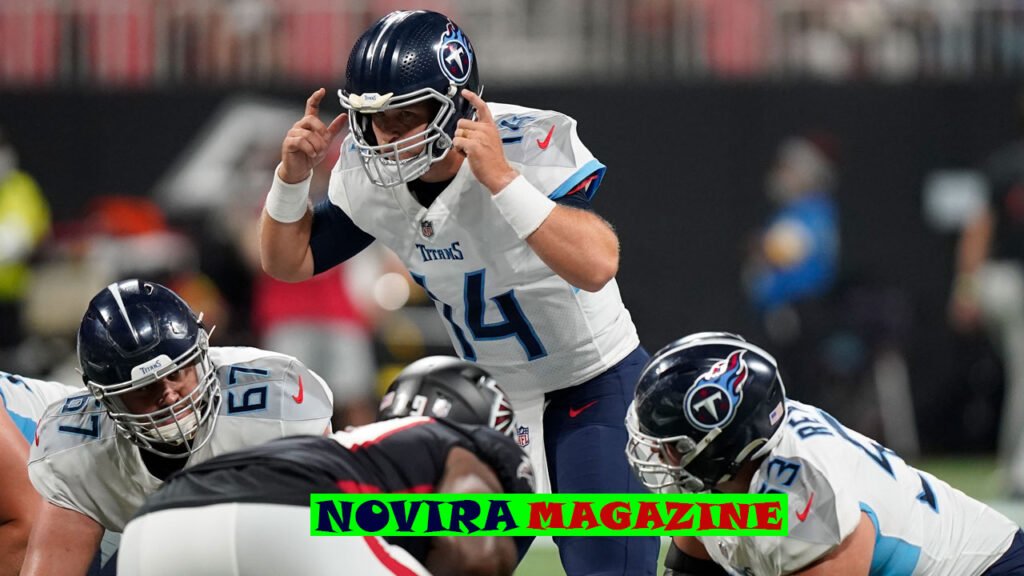
Jermar Jefferson made a bigger impact on the scoreboard. He carried the ball four times for 18 yards, including a 16-yard touchdown run during the third quarter. His score restored Tennessee’s seven-point advantage after Atlanta had tied the game. Both running backs contributed in different ways to the victory.
Nathan Carter’s Rushing Performance
Nathan Carter was Atlanta’s leading rusher, recording 63 yards on nine carries. His biggest play was a 43-yard touchdown run during the third quarter, which helped the Falcons reduce Tennessee’s lead to 13–10.
Carter’s performance showed how one successful rushing play can change the direction of a game. His touchdown also gave Atlanta an important confidence boost after a difficult first half. Although the Falcons eventually lost, Carter’s speed and ability to exploit an opening in the defense made him one of their most effective offensive players.
Tennessee Titans vs Atlanta Falcons Receiving Stats
Receiving statistics provide another important part of the game. Both teams produced significant completions, but Tennessee spread its receptions across several players. Gunnar Helm led the Titans in receiving yards, while Chris Blair finished as Atlanta’s top receiver.
| Player | Team | Receptions | Yards | TD |
|---|---|---|---|---|
| Gunnar Helm | Titans | 4 | 48 | 1 |
| Elic Ayomanor | Titans | 2 | 47 | 0 |
| James Proche II | Titans | 3 | 35 | 0 |
| Xavier Restrepo | Titans | 2 | 18 | 0 |
| Chris Blair | Falcons | 3 | 78 | 1 |
| Dylan Drummond | Falcons | 4 | 22 | 0 |
| Quentin Skinner | Falcons | 2 | 15 | 0 |
| Nick Nash | Falcons | 3 | 14 | 0 |
Source: Tennessee Titans official box score
Gunnar Helm’s Touchdown Catch
Gunnar Helm delivered one of Tennessee’s best offensive performances. The tight end finished with four receptions for 48 yards, including a 25-yard touchdown catch from Brandon Allen. His touchdown helped Tennessee build a 13–3 advantage before halftime.
Helm’s production was particularly important because his catches helped sustain a scoring possession rather than relying entirely on one long completion. He demonstrated reliable receiving ability and contributed during a critical moment. His performance gave Tennessee’s coaches another opportunity to evaluate his potential as a receiving option from the tight end position.
Chris Blair’s Explosive Receiving Play
Chris Blair was Atlanta’s leading receiver with three catches for 78 yards and one touchdown. His biggest contribution came on a 52-yard touchdown reception from Easton Stick in the third quarter. The play helped Atlanta tie the score at 20–20.
Blair’s touchdown demonstrated the Falcons’ ability to produce a significant gain through the passing game. With one successful connection, Atlanta quickly erased Tennessee’s advantage. Although the Falcons failed to score again, Blair remained one of the most impressive performers in the matchup and finished with the highest receiving-yard total of either team.
Defensive Player Stats and Key Performances
Tennessee’s defense played a major role in securing the victory. The unit scored the opening touchdown and made several important stops during the closing stages. Kendell Brooks delivered the biggest defensive moment, while Cedric Gray provided consistent tackling and pressure.
Brooks intercepted Easton Stick and returned the football 53 yards for a touchdown. Gray recorded seven tackles, including a tackle for loss and half a sack. Joe Gaziano also recorded a sack late in the fourth quarter, helping Tennessee protect its lead. These performances underline why defensive statistics matter as much as passing and rushing numbers.
Tennessee Titans vs Atlanta Falcons Quarter-by-Quarter Score
| Quarter | Titans | Falcons |
|---|---|---|
| First | 6 | 0 |
| Second | 7 | 3 |
| Third | 7 | 17 |
| Fourth | 3 | 0 |
| Final | 23 | 20 |
The first half favored Tennessee, which led 13–3 following Brooks’ interception return and Helm’s touchdown reception. Atlanta recovered strongly in the third quarter, scoring 17 points through Carter’s rushing touchdown, two scoring contributions involving Younghoe Koo, and Blair’s long reception. Tennessee also scored through Jefferson during that period.
The fourth quarter was much quieter offensively. Joey Slye converted a 23-yard field goal, and neither team scored afterward. Tennessee’s defensive stops ultimately preserved its three-point lead.
Key Moments That Decided the Match
Several moments shaped the final result. Brooks’ early interception return put Tennessee ahead without its offense needing to score. Helm’s touchdown catch created a stronger halftime advantage, but Atlanta’s third-quarter recovery completely changed the contest.
Jefferson’s rushing touchdown helped Tennessee regain control before Blair’s long receiving score tied the game again. The final turning point came when Siemian helped guide the Titans into field-goal range, allowing Slye to convert from 23 yards. Tennessee’s defense then prevented Atlanta from answering. Each moment contributed directly to the final 23–20 score.
What the Player Stats Reveal About Both Teams
The statistics suggest that Tennessee won through a combination of balanced offense, defensive contributions, and effective possession management. The Titans had more total yards, more first downs, and slightly more possession time. Their offense also produced two touchdown drives covering at least 80 yards.
Atlanta showed resilience, especially during its productive third quarter. However, the Falcons’ early interception proved expensive, and their offense could not complete another scoring drive after tying the game. Both teams gained useful information about reserve quarterbacks and developing players, which is one of the primary purposes of preseason football.
Tennessee Titans vs Atlanta Falcons Previous Match History
The two teams also played during the 2023 NFL regular season. On October 29, 2023, Tennessee defeated Atlanta 28–23 at Nissan Stadium in Nashville. Quarterback Will Levis delivered four touchdown passes in that game, including three to DeAndre Hopkins.
That regular-season meeting differed from the 2025 preseason contest because it involved a different set of players, coaching circumstances, and competitive stakes. Both results were close, but their statistics should be evaluated separately. The 2023 contest was a regular-season victory, while the August 2025 matchup primarily served as a player-evaluation opportunity.
Interesting Facts About the Titans vs Falcons Game
The August 2025 matchup produced several notable details. Tennessee’s victory improved its historical preseason record against Atlanta to seven wins and five losses. Brooks’ interception return was also the Titans’ first preseason pick-six since 2015.
Another interesting detail was the Titans’ use of several rookie starters, including Cam Ward, Chimere Dike, and Elic Ayomanor. Helm also scored his first preseason touchdown, while the Titans put together two offensive touchdown drives of at least 80 yards. These developments made the contest valuable beyond its final score.
Conclusion
The Tennessee Titans vs Atlanta Falcons match player stats show how Tennessee earned a hard-fought 23–20 preseason victory through timely offensive plays and strong defensive contributions. Brandon Allen provided efficient passing, Gunnar Helm and Chris Blair delivered important receiving performances, and Nathan Carter impressed on the ground. Kendell Brooks’ interception return and Joey Slye’s late field goal were especially important. Although Atlanta mounted an impressive third-quarter comeback, Tennessee controlled the closing moments to secure the win.
Frequently Asked Questions
1. Who won the Tennessee Titans vs Atlanta Falcons match?
The Tennessee Titans defeated the Atlanta Falcons 23–20 on August 15, 2025, at Mercedes-Benz Stadium in Atlanta. It was an NFL preseason game.
2. Who had the most passing yards in the Titans vs Falcons game?
Easton Stick led all quarterbacks with 173 passing yards for Atlanta. Brandon Allen led Tennessee with 119 passing yards and one touchdown.
3. Who scored touchdowns for the Tennessee Titans?
Kendell Brooks scored on a 53-yard interception return, Gunnar Helm caught a 25-yard touchdown pass, and Jermar Jefferson scored on a 16-yard run.
4. Who was the leading rusher in the Titans vs Falcons matchup?
Nathan Carter led both teams with 63 rushing yards on nine carries for Atlanta. Jordan Mims led Tennessee with 50 rushing yards.
5. Where can fans find the complete Tennessee Titans vs Atlanta Falcons match player stats?
Fans can find the official passing, rushing, receiving, and team statistics on the Tennessee Titans game box score. They can also read the BuzzSport match recap for additional coverage of the matchup.
See more amazing Information visit Novira Magazine