Best Empanada de Carne Cortada a Cuchillo Near Me: A Complete Guide to Finding the Real Argentine Classic

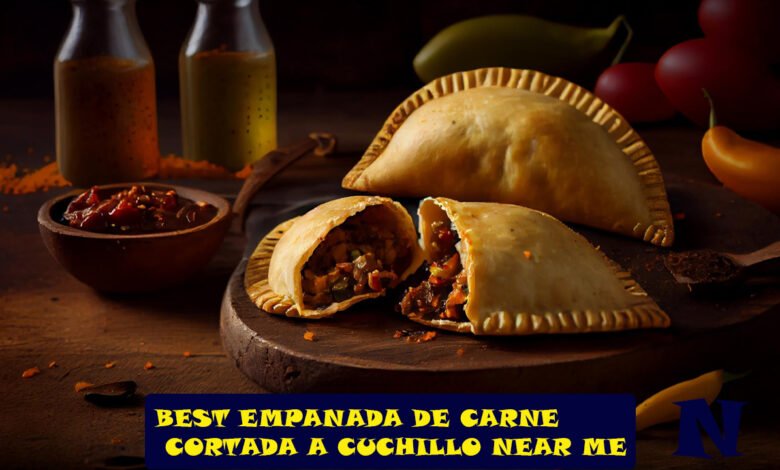
Searching for the Best Empanada de Carne Cortada a Cuchillo Near Me usually means you want something more specific than an ordinary beef empanada. The traditional Argentine version uses beef chopped into small pieces with a knife rather than standard ground or minced meat. That simple difference changes the texture of the filling and helps create the chunky, juicy bite for which this style is known.
Finding an authentic version can take some effort, especially outside Argentina. A good place to start is an Argentine restaurant, bakery, parrilla, or specialist empanada shop. Look for menu descriptions such as “carne cortada a cuchillo,” “carne a cuchillo,” or “knife-cut beef.” The best examples balance tender beef, onion, seasoning, pastry, and enough moisture to make the filling juicy without making the dough soggy.
Traditional recipes show that there is no single universal ingredient list. Cocineros Argentinos, for example, publishes versions containing knife-cut lean beef, onion, spring onion, paprika, cumin, egg and green olives. Other preparations use different cuts, peppers or slightly different seasonings.
What Is an Empanada de Carne Cortada a Cuchillo?
“Carne cortada a cuchillo” literally refers to meat cut with a knife. For an empanada, beef is manually chopped into small pieces rather than being passed through a meat grinder. The result is a filling in which the individual pieces of beef remain noticeable. That gives the empanada a different mouthfeel from one filled with finely minced meat.
The beef is normally combined with cooked onions and seasonings before the mixture is cooled and enclosed inside pastry. Recipes vary significantly by cook and regional preference. Paprika, cumin and ground chili frequently appear, while hard-boiled eggs, olives, peppers and spring onions are also common additions. The finished empanada can then be baked until golden or fried.
Why Knife-Cut Beef Makes a Difference
The preparation of the beef is the main reason people specifically search for this empanada. Ground beef develops a relatively uniform texture because the meat has been broken into very small pieces. Knife-cut beef keeps recognizable pieces intact. When prepared correctly, you can feel the beef itself instead of experiencing the filling as one finely minced mixture.
Knife cutting also allows the cook to control the size of the pieces. Some recipes recommend small cubes, while others use slightly larger pieces depending on the cut and cooking method. A 2026 Argentine recipe, for example, specifies lean beef chopped into cubes of about five millimetres.
How to Find the Best Empanada de Carne Cortada a Cuchillo Near Me
Start with businesses specializing in Argentine cuisine rather than searching only for “beef empanadas.” Search restaurant menus for the complete Spanish phrase “carne cortada a cuchillo.” You can also try “empanada carne a cuchillo,” “Argentine knife-cut beef empanada,” and “Argentinian empanadas.” These variations can uncover restaurants whose menus use slightly different terminology.
Once you find a possible restaurant, check its current menu before travelling. A restaurant may sell several beef empanadas without offering the knife-cut version. Photos can provide clues, but the menu description or confirmation from the restaurant is more useful. The key question is whether the beef is actually chopped into pieces rather than simply using regular minced beef.
What Should a Good Knife-Cut Beef Empanada Taste Like?
A well-made empanada should offer a balance between beef, onion, seasoning and pastry. The meat needs to remain prominent. Onion contributes sweetness and moisture, while spices add depth without completely masking the flavour of the beef. Traditional recipes frequently include paprika and cumin, although the exact seasoning mixture differs from one recipe to another.
Juiciness is another important characteristic. One Cocineros Argentinos preparation specifically adds some of the meat cooking broth so that the filling remains juicy. The filling is then cooled before the empanadas are assembled. This highlights an important quality: juicy does not mean watery. The filling should retain moisture while remaining contained inside the pastry.
Traditional Ingredients to Look For
Beef is naturally the centre of the dish. Different recipes use different cuts, including nalga, cuadrada, bola de lomo, roast beef and matambre. This variation means that seeing a different beef cut on a restaurant description does not automatically make the empanada inauthentic. What matters for the name “cortada a cuchillo” is the method used to prepare the meat.
Onions are another recurring ingredient. Depending on the preparation, you may also encounter spring onion, hard-boiled egg, green olives, peppers, paprika, cumin and ají molido. Recipes are not identical, so an empanada does not need every one of these ingredients to qualify as knife-cut beef.
Baked vs. Fried Empanadas
Both cooking methods appear in Argentine preparations. Baked empanadas develop a browned pastry exterior and are particularly convenient when making a large batch. One published recipe from Nestlé Argentina instructs cooks to bake the assembled empanadas at 200°C after brushing them with egg.
Frying produces a different crust and is also well established. Cocineros Argentinos has dedicated preparations for fried knife-cut beef empanadas, including versions made with handmade dough. Some recipes explicitly say that the assembled empanadas may be fried or cooked in a very hot oven. Therefore, cooking method alone is not a reliable test of authenticity.
How to Judge an Empanada Before Ordering
Read the menu description carefully. “Beef empanada” and “carne cortada a cuchillo” are not necessarily the same thing. If a restaurant emphasizes knife-cut beef, it is a stronger match for this particular search. You can ask the restaurant directly how the beef is prepared when the description is unclear.
Next, consider whether the restaurant specializes in Argentine cooking. A specialist does not automatically guarantee a better empanada, but it increases the chance of finding regional styles and traditional fillings. Recent customer photos and reviews can also help you judge pastry thickness, filling quantity and consistency, although individual reviews remain subjective.
What the Inside Should Look Like
Cut open a genuine knife-cut beef empanada and you should normally be able to identify pieces of meat. The filling should not look exactly like a smooth mass of finely minced beef. That visible texture is one of the easiest ways to understand why this style has its own name.
You may also see pieces of onion, egg, olive or pepper, depending on the recipe. The precise appearance varies considerably. Traditional published recipes themselves demonstrate these differences: some include olives and eggs, while others include peppers or use different proportions of onion and beef.
Why the Filling Is Usually Cooled First
Several traditional recipes cool the cooked filling before assembling the empanadas. Cocineros Argentinos instructs cooks in one version to refrigerate the filling after cooking the beef and onions, while its other preparations similarly call for cooling before filling the pastry.
This step makes practical sense because the cook needs to place the mixture onto the pastry and seal the edges cleanly. It also gives the prepared filling time to settle before assembly. For diners, this behind-the-scenes technique is not visible, but careful preparation can make the difference between a neatly sealed empanada and one that loses its juices during cooking.
Regional Variations and Different Recipes
There is no reason to expect every carne cortada a cuchillo empanada to taste identical. Empanadas are prepared throughout Argentina, and ingredient combinations and cooking practices vary. Even published Argentine recipes for knife-cut beef versions differ in their choice of meat, vegetables, fat and seasoning.
One preparation might contain green olives and egg, while another may emphasize peppers or spring onions. Some are baked and others fried. Rather than judging authenticity according to one optional ingredient, concentrate on the defining feature: beef that has been cut into small pieces with a knife and prepared as a savoury empanada filling.
Finding the Best Empanada de Carne Cortada a Cuchillo Near Me When Options Are Limited
Finding this specialty outside areas with a large Argentine food scene may be difficult. A local search may return ordinary restaurants rather than businesses explicitly advertising carne cortada a cuchillo. In that situation, widen the search to Argentine restaurants, South American bakeries, parrillas and specialist empanada businesses in nearby cities.
It is better not to assume that a nearby restaurant offers the dish just because it serves beef or other filled pastries. Search results around your area may not identify a verified specialist serving this exact Argentine preparation. Check the current menu or contact the restaurant before making a special journey.
Can You Make Carne Cortada a Cuchillo at Home?
Yes. The basic method is accessible to home cooks, although preparing the beef and allowing the filling to cool adds time. A traditional approach starts by chopping beef into small pieces. Onion is cooked in fat, followed by the beef and seasonings. The mixture is cooled, and ingredients such as chopped hard-boiled egg, green onion or olives may be added before assembly.
The filling is placed on pastry discs, which are folded and sealed. Depending on the chosen recipe, the empanadas can be baked or fried. Published recipes differ in technique, so following one complete recipe from start to finish is generally easier than combining measurements from several versions.
Common Signs of a Great Empanada
The first sign is texture. You should be able to recognize the beef rather than finding only a finely ground filling. The second is moisture. A good filling can be juicy, but the pastry should still hold together well enough to eat comfortably.
The third is balance. Onion and spices should complement the meat rather than overwhelm it. Finally, pay attention to the pastry. Whether baked or fried, it needs enough structure to hold a generous filling. These qualities together are more meaningful than simply choosing the largest or most heavily filled empanada.
What to Order Alongside It
Carne cortada a cuchillo empanadas can work as a snack, starter or part of a larger meal. If an Argentine restaurant sells several varieties, ordering the knife-cut beef version alongside another traditional filling can make the differences easier to appreciate.
For first-time diners, however, tasting one on its own is worthwhile. The point of ordering this particular style is to notice the beef texture, seasoning and juices. Heavy sauces can hide those characteristics. Try the empanada first before adding condiments so you can judge the filling and pastry on their own merits.
Interesting Facts About Carne Cortada a Cuchillo Empanadas
The phrase “cortada a cuchillo” describes a preparation technique rather than a particular beef cut. Traditional recipes use several different cuts, yet all can fall under the same general name when the beef is chopped manually into pieces.
Another interesting point is how flexible the recipe can be. Egg and olives are found in many versions, but they are not present in every published preparation. The pastry can also be homemade or prepared from empanada discs, and the final product may be baked or fried. The recognizable constant remains the distinctive knife-cut meat filling.
Conclusion
The search for the Best Empanada de Carne Cortada a Cuchillo Near Me is really a search for a specific Argentine eating experience. Instead of ordinary ground beef, the filling uses beef cut into small pieces with a knife. Onions, spices and optional ingredients such as egg, olives, peppers or spring onion complete the filling, while baking and frying are both established cooking methods.
When searching locally, prioritize Argentine restaurants, bakeries and dedicated empanada shops, then confirm that the menu specifically mentions carne cortada a cuchillo. Look for distinct pieces of beef, a juicy but manageable filling, balanced seasoning and properly cooked pastry. If no verified local restaurant serves it, making the dish at home from a traditional Argentine recipe is another practical way to experience it.
FAQs
What does carne cortada a cuchillo mean?
Carne cortada a cuchillo means meat cut with a knife. In an empanada, the beef is chopped into small pieces instead of being processed into ordinary minced or ground meat. This creates a more distinct, chunky texture and allows individual pieces of beef to remain noticeable in the finished filling.
How can I find the Best Empanada de Carne Cortada a Cuchillo Near Me?
Search for Argentine restaurants, parrillas, bakeries and specialist empanada shops. Look specifically for “carne cortada a cuchillo” or “knife-cut beef” on the current menu. If the menu only says “beef empanada,” ask whether the restaurant uses chopped or ground beef before ordering.
What ingredients are in a traditional knife-cut beef empanada?
Recipes differ, but beef and onion form the foundation of many versions. Common additions include spring onion, paprika, cumin, ground chili, hard-boiled egg and green olives. Some recipes also use peppers. There is no single ingredient combination used in every preparation.
Are carne cortada a cuchillo empanadas baked or fried?
They can be either. Traditional and contemporary Argentine recipes include both methods. Baking creates a browned pastry shell, while frying produces its own distinctive crust. The knife-cut preparation of the beef, rather than whether the empanada is baked or fried, is the important feature of this variety.
What is the difference between a regular beef empanada and carne cortada a cuchillo?
The main difference is the preparation and resulting texture of the meat. A standard beef empanada may contain ground or minced beef. Carne cortada a cuchillo specifically describes beef chopped into small pieces with a knife. This leaves recognizable pieces of meat in the filling and gives it a noticeably different texture.
See more amazing Information visit Novira Magazine