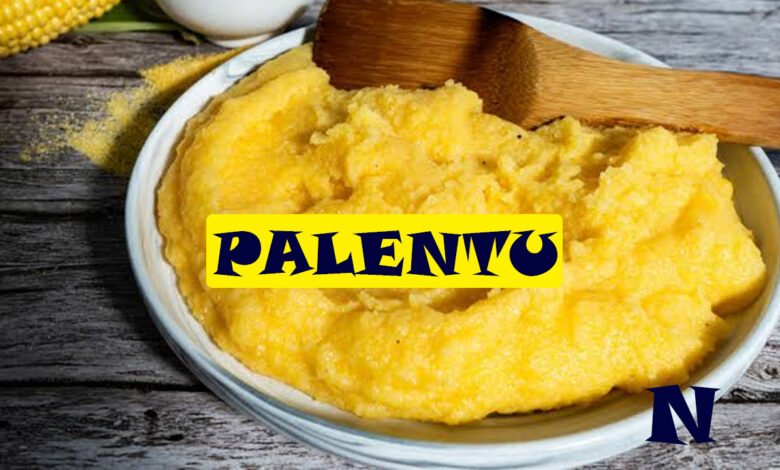
Palentu is a word that can look unfamiliar to English speakers, but its clearest documented meaning is connected to palenta, the Serbo-Croatian word for polenta. More precisely, palentu is the accusative singular form of palenta. In everyday food contexts, it therefore points toward the familiar cornmeal dish known internationally as polenta.
Rather than being the name of a celebrity, company, or newly invented lifestyle concept, Palentu is best understood through language and traditional food. Polenta itself is a thick porridge commonly made from cornmeal and has a particularly strong association with Italian cooking. It can be eaten hot and creamy or cooled until firm enough to slice, grill, bake, or fry.
What Does Palentu Mean?
The most useful way to understand Palentu is through the Serbo-Croatian noun palenta. Linguistic references list palenta as a feminine noun meaning “polenta.” Its singular forms change according to grammatical case. Palenta is the nominative form, while palentu is used in the accusative singular.
This grammatical detail explains why someone may encounter Palentu in a sentence even though dictionaries and recipes are more likely to list the food under palenta or polenta. It does not require a separate mysterious definition. The form changes because of its role in a sentence, just as words in many other languages change their endings according to grammar.
Palentu, Palenta, and Polenta
Palentu, palenta, and polenta should not automatically be treated as three completely different dishes. Palenta is the Serbo-Croatian word for polenta, while palentu is one grammatical form of that noun. Polenta is the internationally familiar Italian term for a thick porridge now usually prepared from cornmeal.
This distinction is important because online articles sometimes give Palentu an independent identity without providing strong linguistic evidence. A more careful explanation keeps the language clear. When Palentu appears in a Serbo-Croatian context, readers should first consider whether they are simply seeing the accusative form of palenta.
The Linguistic Background of Palentu
Serbo-Croatian uses grammatical cases, meaning nouns can change form depending on their function within a sentence. According to the documented declension of palenta, the singular forms include palenta in the nominative, palente in the genitive, palenti in the dative and locative, palentu in the accusative, palento in the vocative, and palentom in the instrumental.
That makes Palentu easier to understand. It is not necessary to search for an invented biography or an unrelated modern definition. Its appearance can result naturally from grammar. This also demonstrates why translating individual words without considering the surrounding sentence can sometimes create confusion.
The Food Behind the Word Palentu
The food connected with Palentu is polenta, a porridge traditionally associated especially with Northern Italian cuisine. Modern polenta is usually made by cooking medium- or coarse-ground cornmeal in liquid. As the cornmeal absorbs water, the mixture thickens and develops a creamy texture.
Its simplicity is one of its defining characteristics. A basic preparation needs little more than cornmeal, water, and salt. Butter, olive oil, cheese, herbs, stock, vegetables, or sauces can then change the finished dish considerably. Because its flavor is relatively mild, polenta can act as a base for richer foods rather than competing with them.
Early History of Polenta
Although modern polenta is strongly associated with corn, the word has a much older history. Merriam-Webster traces Italian polenta to Latin terminology connected with crushed and hulled barley, while the word was already in use long before maize became a European crop.
This matters because ancient and medieval forms of polenta were not necessarily the bright yellow cornmeal dish people picture today. Grain porridges existed before maize arrived in Europe. The modern corn-based preparation developed later, showing how traditional dishes can retain old names while their central ingredients change over centuries.
How Corn Changed Polenta
Modern polenta became closely identified with maize after the crop reached Europe from the Americas. Over time, cornmeal became the ingredient most strongly associated with the dish, particularly in northern Italy. Today, dictionaries commonly define polenta as a thick porridge or mush made from cornmeal.
The transition helped create the familiar yellow polenta found in kitchens today. Ground corn offered a practical base that could be cooked into a substantial meal and combined with whatever other ingredients were available. That adaptability contributed to the dish becoming deeply established in regional home cooking.
What Is Palentu Made From?
If Palentu is being used to refer to palenta or polenta as food, cornmeal is normally the central ingredient. Cornmeal is dried maize that has been ground into particles and can be produced in different levels of coarseness. The grind affects how the finished dish feels in the mouth and how firmly it sets.
Water and salt are the simplest additions. Some cooks replace part of the water with stock or use richer finishing ingredients. Butter, grated cheese, olive oil, herbs, and other seasonings can all be added depending on the recipe and regional preference.
How Palentu Is Traditionally Prepared
A basic method begins by heating water, usually with salt, before gradually adding cornmeal while whisking or stirring. The mixture is then cooked over lower heat until the grains hydrate and the dish becomes smooth and thick. Traditional polenta can require considerably more cooking than instant varieties.
One published basic recipe uses one cup of polenta with four cups of water and cooks the mixture until creamy. Butter, olive oil, or Parmesan can be added at the end if desired. Exact cooking times and liquid ratios can vary according to the cornmeal product, so package directions remain useful.
Why Stirring Matters
Stirring helps distribute the cornmeal through the liquid and reduces the chance of dry lumps forming. When cornmeal is first added to hot liquid, steady whisking is particularly useful. After the mixture has become evenly combined, it can generally be simmered while being stirred regularly until it reaches the preferred consistency.
The cooking process allows the ground corn to absorb liquid and soften. The result can range from loose and spoonable to extremely thick. This means Palentu does not have to look exactly the same every time. Texture depends on the cornmeal, liquid ratio, cooking method, and intended use.
Soft and Creamy Palentu
Soft polenta is served shortly after cooking, while it is still warm and spoonable. Medium-ground cornmeal can produce the creamy texture commonly used as a side dish. Butter, cheese, or olive oil may be stirred through at the end to add richness, although plain versions are also possible.
This style works particularly well beneath foods containing sauce because the polenta provides a mild base. Vegetables, mushrooms, tomato-based preparations, braised dishes, and stews can all be served alongside or over it. The final combination depends largely on local cooking traditions and personal preference.
Firm, Grilled, Baked, or Fried Palentu
Polenta changes noticeably when it cools. Instead of remaining a loose porridge, a thick batch can become firm enough to cut. This creates an entirely different range of serving possibilities without requiring a different main ingredient.
Once solidified, polenta can be sliced and then baked, grilled, or fried. The outside can develop a firmer or crisp texture while the interior remains softer. This makes leftover polenta especially useful because yesterday’s creamy dish can become the starting point for a different meal the next day.
Palentu and Balkan Food Culture
The linguistic connection between Palentu and the Balkans is clearer than many of the claims made about the keyword online. The Serbo-Croatian dictionary entry for palenta directly translates the noun as polenta and records palentu as its accusative singular form. It also lists related terms including pura, kačamak, and žganci.
This illustrates the broader diversity of cornmeal and grain dishes across the region. Similar-looking foods may carry different names, preparation traditions, textures, and cultural associations. For that reason, it is better not to assume that every regional cornmeal dish is completely interchangeable simply because the finished foods can look similar.
Palentu in Italian Food Tradition
Polenta is particularly well known as a Northern Italian food. Modern descriptions typically define it as a porridge made with coarse- or medium-ground cornmeal, while historical versions were prepared from other grains before maize became central to the recipe.
Italian cooking also demonstrates how versatile polenta can be. It may appear as a creamy base beneath sauces or vegetables, as a firm accompaniment, or as slices that have been cooked again. This flexibility helped a simple staple move beyond its humble origins and remain relevant in modern cooking.
Palentu Versus Cornmeal
Cornmeal and Palentu are related, but they are not identical concepts. Cornmeal is an ingredient: dried corn ground into particles of different sizes. Polenta is a prepared dish made by cooking suitable cornmeal in liquid.
This difference is similar to the distinction between flour and bread. One is a raw ingredient that can be used in numerous recipes, while the other is a particular food made from it. Cornmeal can also appear in baked goods and other dishes, so buying cornmeal does not automatically mean that the product itself is already polenta.
Palentu Versus Grits
Polenta and grits can look similar because both can become warm corn-based porridges. However, they developed within different culinary traditions and can use different types of corn and processing methods. Polenta is associated with Italian cuisine, whereas grits have a strong connection to the American South.
Traditional distinctions can also involve the variety of corn and its grind. Because modern commercial products vary considerably, texture alone is not always enough to identify which dish someone is eating. Cultural context, ingredients, and preparation provide a better guide.
Flavor and Physical Appearance
A basic bowl of corn polenta normally has a mild corn flavor and a pale-to-rich yellow appearance when yellow cornmeal is used. White cornmeal can produce a much lighter version. The exact color depends on the corn itself rather than on a universal Palentu standard.
Texture is equally variable. Freshly cooked polenta can be smooth, thick, and creamy, while cooled polenta becomes considerably firmer. Coarser cornmeal generally creates a more noticeable grain texture, whereas other grinds can produce a softer result. This variation is part of the food’s versatility.
Nutrition and Palentu
The nutritional profile of Palentu depends heavily on what is actually put into the pot. Plain polenta is mainly a carbohydrate-rich grain preparation. Adding butter, cream, cheese, oil, meat sauces, or other ingredients changes its calories, fat, protein, sodium, and overall nutritional composition.
This is why a single nutrition figure should not be presented as universal. A plain serving cooked with water is nutritionally different from a restaurant version enriched with cheese and butter. Healthline similarly notes that plain polenta without cheese or cream is relatively low in calories but does not provide large amounts of many vitamins and minerals.
Is Palentu Gluten-Free?
Corn itself does not contain gluten, so plain polenta made only from cornmeal, water, and salt can fit a gluten-free diet. However, anyone who must strictly avoid gluten should still check the package label and manufacturing information because ingredients and processing conditions vary between products.
Prepared versions also require attention. Sauces, stocks, seasonings, cheese mixtures, and other additions may introduce ingredients that are not suitable for every diet. Therefore, describing every dish called Palentu as automatically gluten-free would be too broad. The exact recipe and product labels matter more than the name alone.
What Can You Serve With Palentu?
One reason polenta remains useful is its neutral base. A creamy serving can accompany mushrooms, cooked vegetables, tomato sauces, cheese, stews, or slow-cooked dishes. A firmer version can be sliced and served as a side or cooked again to produce a more structured texture.
There is no need to limit Palentu to one meal or one topping. The same basic cornmeal preparation can be made simple for everyday eating or enriched for a more elaborate dinner. That flexibility is one of the strongest practical reasons the dish has remained familiar across generations.
Modern Ways to Use Palentu
Modern cooks can use the basic idea of polenta without abandoning its simple character. Soft polenta can replace other starch-based sides beneath roasted vegetables or a hearty sauce. Firm slices can be baked until the surface becomes more textured, while leftover pieces can be grilled or fried.
Different liquids and finishing ingredients also change the experience. Stock can add savory depth, while cheese creates a richer dish. Olive oil offers another finishing option. These are variations on the core preparation rather than evidence that Palentu is a completely separate modern food.
Why Is the Keyword Palentu Confusing Online?
The main source of confusion is that Palentu looks like a standalone proper name when removed from its linguistic context. Search results can therefore encourage writers to invent explanations around the word. Some online pages describe it as a trend, philosophy, digital concept, or unique brand-like term without establishing a reliable historical or linguistic foundation.
The documented language evidence provides a much simpler explanation. Palentu appears in the Serbo-Croatian declension of palenta and functions as its accusative singular. Readers should therefore be cautious when encountering elaborate claims about a mysterious alternative meaning that lacks dependable sourcing.
Does Palentu Have a Biography or Personal Life?
No verified evidence supports treating Palentu as a specific public figure. Therefore, details such as a birth date, birthplace, age, height, education, career, relationship status, family, and personal life are not applicable to the documented food and linguistic meaning of the keyword.
Creating those details simply to fill a biography-style template would produce misinformation. The appropriate approach is to adapt the article to the subject. In this case, language, culinary history, ingredients, preparation, serving styles, and cultural context are relevant, while celebrity-style personal information is not.
Does Palentu Have a Net Worth?
Palentu does not have a verified personal net worth because the documented term is not a person. There is also no reliable basis for assigning a financial valuation to the word itself.
Similarly, claims that Palentu represents a particular business should not be made without evidence identifying the legal company or brand involved. A domain or website using a word does not automatically establish that every search for the word refers to that business. For the food-related meaning discussed here, net worth is simply not applicable.
Does Palentu Have Social Media Accounts?
There is no reason to assign personal social media accounts to Palentu in its documented linguistic sense. It is a word form associated with palenta, not a verified individual whose official Instagram, Facebook, TikTok, X, or YouTube presence can be listed.
Social networks may contain posts, usernames, hashtags, businesses, or recipes using similar words. Those should not automatically be described as the “official Palentu” account. Verification requires evidence that a particular account represents the entity being discussed, and that connection is not established merely by a matching username.
Palentu Outside Traditional Cooking
The wider idea behind polenta is highly adaptable because cooked cornmeal can move between soft and firm forms. It can begin as a warm porridge and later become a sliceable food suitable for additional cooking. That gives home cooks several options from one basic preparation.
This adaptability also makes it useful for leftovers. Instead of trying to restore cooled polenta to exactly its original consistency, a cook can take advantage of its firmer texture. Slicing and baking, grilling, or frying it creates a new presentation while keeping the same underlying cornmeal base.
Interesting Facts About Palentu
The most interesting fact about Palentu is linguistic: it is a documented grammatical form rather than simply an unusual spelling created by the internet. Serbo-Croatian sources identify palentu specifically as the accusative singular of palenta.
The food behind the word has an equally interesting history. Polenta existed as a concept before today’s corn-based version became standard, and its name has roots extending back to Latin terminology associated with grain. Modern polenta can also completely change its texture after cooling, allowing one preparation to be served creamy, baked, grilled, or fried.
Why Palentu Still Matters Today
Palentu is worth understanding because it shows how food, language, and internet search behavior can overlap. A grammatical word form can become a keyword by itself, leading readers to wonder whether it represents a separate dish, person, company, or trend.
Looking at reliable linguistic evidence resolves much of that uncertainty. Palentu leads back to palenta and ultimately to the familiar culinary subject of polenta. From there, its continued relevance is easy to understand: cornmeal is simple to prepare, the finished dish is adaptable, and generations of cooking traditions have found different ways to serve it.
Conclusion
Palentu is best understood as the accusative singular form of the Serbo-Croatian noun palenta, which means polenta. That linguistic explanation is more firmly supported than claims presenting Palentu as a mysterious new lifestyle concept or an unidentified public figure.
The food connected with the word is a versatile porridge now commonly made from cornmeal. It can be served warm and creamy or cooled until firm enough to slice, grill, bake, or fry. Its long history, inexpensive basic ingredients, adaptable texture, and ability to work with many other foods explain why polenta and related regional preparations continue to have a place in traditional and modern kitchens.
FAQs
What does Palentu mean?
Palentu is a Serbo-Croatian grammatical form of palenta. Specifically, it is the accusative singular form. Palenta means polenta, so the word usually needs to be understood within that linguistic and food context rather than as the name of an unrelated modern concept.
Is Palentu the same as polenta?
Palentu is not the standard English or Italian name of the dish. It is a grammatical form of the Serbo-Croatian word palenta, which means polenta. The underlying food is therefore directly connected with polenta, although recipes and regional serving traditions can vary.
What is Palentu made from?
When the word refers to palenta or modern polenta as food, the basic dish is normally made from cornmeal cooked in liquid. Water and salt can produce a simple version, while butter, olive oil, cheese, stock, herbs, and other ingredients may be added for additional flavor.
How do you cook Palentu?
A common method is to gradually whisk cornmeal into hot water and cook it over lower heat until thick and creamy. One basic polenta recipe uses four cups of water for one cup of polenta and cooks it for around 30 minutes after the initial mixing stage. Product instructions should be followed because different cornmeal varieties can require different cooking times.
Can Palentu be fried or grilled?
Yes. Thick cooked polenta can be allowed to cool and solidify. Once firm, it can be cut into portions and baked, fried, or grilled. This is one of the most useful characteristics of the dish because soft polenta and firm cooked slices provide noticeably different textures while starting with essentially the same cornmeal preparation.
See more amazing Information visit Novira Magazine