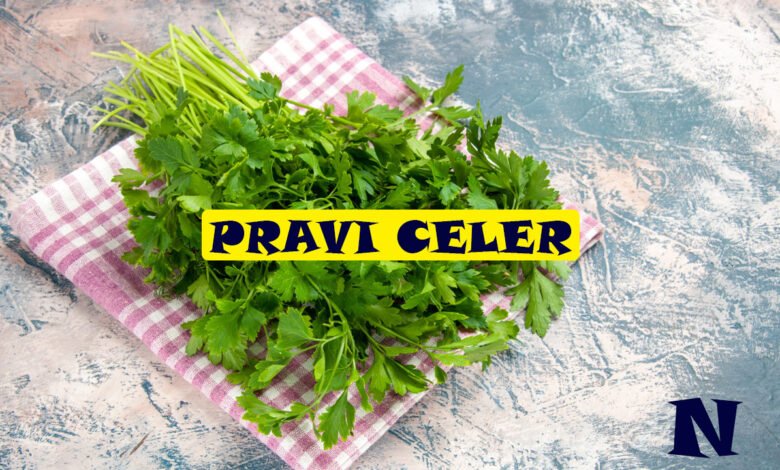
Pravi Celer is a South Slavic term associated with celery, the familiar edible plant scientifically known as Apium graveolens. In simple English, the phrase can be understood as “true celery” or “real celery.” Despite some confusing descriptions online, Pravi Celer is not recognized botanically as a separate new vegetable, rare cultivar, or special superfood. The accepted species behind the term is ordinary celery.
The name appears mainly in discussions about Balkan food, gardening, traditional cooking, and nutrition. Depending on the context, it can refer to stalk celery, leafy celery, or celery grown for its enlarged base, commonly called celeriac. Understanding this distinction is important because different cultivated forms of the same species can look surprisingly different while remaining closely related botanically.
Botanical details in this table are based primarily on the accepted classification and descriptions maintained by Kew Science.
What Is Pravi Celer?
Pravi Celer is best understood as a regional expression for celery rather than the formal name of an unusual plant. “Pravi” can carry the meaning of real, true, or genuine, while “celer” refers to celery. Recent explanations of the term consistently connect it with Apium graveolens, the scientifically accepted celery species.
This distinction matters because internet content sometimes presents Pravi Celer as a special variety with properties that ordinary celery supposedly lacks. Reliable botanical classification does not establish a separate species called “Pravi Celer.” Kew Science recognizes Apium graveolens as the accepted species, while names associated with cultivated celery and celeriac are treated within that same botanical species.
The Meaning Behind the Name Pravi Celer
The easiest translation of Pravi Celer is “true celery” or “real celery.” The expression is connected with South Slavic language use and is particularly encountered in material associated with countries such as Croatia, Serbia, and Bosnia and Herzegovina. The wording can make the vegetable sound unfamiliar to English-speaking readers even though the underlying plant is well known.
The important point is that “true” does not automatically mean organic, nutritionally superior, ancient, unmodified, or better than supermarket celery. Those are separate characteristics that would need their own evidence. The term itself is primarily a linguistic and regional description rather than a scientific quality label.
Botanical Background of Pravi Celer
The scientific name associated with Pravi Celer is Apium graveolens L. It belongs to the Apiaceae family and the genus Apium. Kew Science currently recognizes Apium graveolens as an accepted species and describes its native range as extending from Macaronesia and northern Africa through Europe toward the western Himalaya.
Celery is generally a biennial plant growing mainly in temperate environments. Botanical descriptions show that forms of the plant can develop grooved stems, divided leaves, small greenish-white flowers and tiny fruits. Its familiar aroma is another recognizable characteristic. Depending on the variety and growing conditions, celery can differ considerably in size, leaf structure, stalk thickness and the development of its underground portions.
Early History and Origins
Celery has a much longer history than the recent online popularity of the phrase Pravi Celer might suggest. Kew’s botanical information records a wide native distribution across Europe, parts of northern Africa, western Asia and neighboring regions. The species therefore cannot accurately be described as a newly discovered Balkan vegetable.
Historical botanical material summarized by Kew also indicates that celery has been cultivated for a very long time. References describe celery in ancient contexts, including its use by Greeks and Romans, while evidence of the plant has also been associated with ancient Egypt. Early uses were not identical to the modern habit of eating large crisp stalks; celery was also valued for flavoring and other traditional purposes.
Pravi Celer and Regular Celery
There is no established botanical rule separating Pravi Celer from “regular celery” as two independent species. Both descriptions lead back to Apium graveolens. What consumers see in markets can vary because growers have selected celery plants for particular characteristics, such as thicker stalks, stronger leaves or an enlarged edible base.
Consequently, two forms of celery can look different without being unrelated plants. The tall green stalk celery familiar in many supermarkets has been selected for useful leaf stalks. Celeriac has instead been selected for its enlarged lower portion. Regional varieties may also have different aromas, colors and textures. These differences should not be confused with proof that Pravi Celer represents a scientifically separate species.
Pravi Celer and Celeriac
Celeriac is one of the main reasons searches for Pravi Celer can become confusing. Unlike familiar stalk celery, celeriac develops a large, rough, rounded edible base. Once peeled, its pale interior can be cooked, mashed, roasted or incorporated into soups and other dishes. It carries the characteristic celery-like aroma while providing a very different texture.
Botanically, however, celeriac remains closely tied to Apium graveolens. Kew currently treats names such as Apium graveolens subsp. rapaceum and Apium graveolens var. rapaceum as synonyms within Apium graveolens rather than accepted independent species.
This means a recipe containing the word “celer” should be interpreted through context. If it asks for a large root-like vegetable, celeriac may be intended. If it discusses green crunchy stalks, stalk celery is probably required. Pravi Celer by itself does not reliably identify one particular commercial form.
Physical Appearance of Pravi Celer
The appearance of Pravi Celer depends on the cultivated form. Familiar stalk celery generally produces upright green leaf stalks topped by leafy growth. Some varieties have broad, fleshy stalks, while others are slimmer and more strongly flavored. Wild or less intensively selected forms can look considerably different from neatly trimmed supermarket bunches.
Botanical descriptions of Apium graveolens record an erect herb with the recognizable smell of celery. Some descriptions report plants reaching around one metre or slightly more, although size is not fixed across all varieties and environments. The species develops divided leaves and small flowers arranged in characteristic umbels.
Celeriac looks quite different because the swollen base is the main harvested feature. Its exterior is typically uneven and rough rather than smooth and attractive. This visual difference sometimes causes people to assume that stalk celery and celeriac are unrelated vegetables, even though both belong within the same celery species.
Flavor and Aroma
Celery has a fresh, unmistakably aromatic flavor. Its exact intensity varies according to cultivar, plant part, age and growing conditions. Crisp stalk varieties are often mild enough to eat raw, while leaves can provide a noticeably stronger herbal flavor. Celeriac combines the recognizable celery aroma with a denser texture suitable for cooking.
There is no reliable botanical basis for claiming that every vegetable labeled Pravi Celer tastes stronger or better than all ordinary celery. Such differences depend on the particular cultivar and growing conditions rather than the phrase alone. Freshness also matters greatly. Newly harvested celery can be crisp and aromatic, whereas celery stored too long gradually loses firmness.
Nutritional Value of Pravi Celer
Because Pravi Celer refers to celery rather than a scientifically separate vegetable, its nutritional discussion should follow established information about celery. Fresh stalk celery contains a high proportion of water and relatively few calories, making it an easy vegetable to include in meals where volume and freshness are desirable.
Celery also supplies dietary fiber and micronutrients. The exact amounts depend on serving size, cultivar, preparation and the part of the plant eaten. Celeriac has a different nutritional profile from stalk celery because the enlarged base has a different composition and density.
It is therefore misleading to describe Pravi Celer as possessing a mysterious nutritional profile unavailable in normal celery. The sensible approach is to treat it as part of a varied diet and evaluate nutrition according to the particular celery product being eaten rather than claims attached to an unfamiliar regional name.
Health Benefits Without the Hype
Celery can contribute to a balanced diet primarily as a vegetable with substantial water content, fiber and useful micronutrients. Eating vegetables as part of an overall varied dietary pattern is more meaningful than treating a single food as a cure or “detox” product.
Some traditional sources have associated celery with medicinal uses. Kew’s collected botanical references document historical medicinal applications, but historical use should not automatically be interpreted as proof of a modern medical treatment.
Claims that Pravi Celer can independently cure disease, rapidly remove toxins, guarantee weight loss or outperform ordinary celery require strong scientific evidence. The name itself provides no such evidence. Its genuine value is simpler: it is a versatile edible plant that can contribute flavor, texture, water and nutrients to everyday meals.
How Pravi Celer Is Used in Cooking
One strength of celery is its flexibility in the kitchen. Crisp stalks can be washed, sliced and eaten raw in salads or served alongside other vegetables. They can also be chopped into soups, stews and sauces, where their aromatic character helps create a flavorful base.
Celery leaves are useful too. Instead of immediately throwing them away, cooks can use clean leaves as an aromatic addition to soups, stocks and savory dishes. Their flavor can be more concentrated than that of the stalks, so smaller amounts may be enough.
Celeriac provides another set of possibilities. After removing its tough exterior, the edible interior can be boiled, roasted, mashed or incorporated into soups. This variety of uses helps explain why celery appears in many European culinary traditions in forms that may be unfamiliar to people accustomed only to supermarket stalks.
Traditional Role in Balkan and European Cooking
The connection between Pravi Celer and the Balkans is mainly linguistic and culinary. Celery is frequently associated with soups, stocks and vegetable mixtures in regional cooking, where its aroma works alongside ingredients such as carrots, onions and herbs.
Different households and regions naturally prepare celery differently. Root forms can be particularly practical in cooked dishes because they provide both texture and a distinctive savory aroma. Leaves can serve as seasoning, while stalks may be cooked or consumed fresh.
It would be inaccurate to describe one universal “Pravi Celer tradition” covering every Balkan country. Food customs differ between communities. What can safely be said is that celery has an established place in European food culture and that regional terminology helps explain why English-language readers sometimes encounter unfamiliar names for familiar ingredients.
Growing Pravi Celer
Growing Pravi Celer means growing an appropriate form of Apium graveolens. Celery generally prefers fertile soil and reliable access to moisture. Its wild relatives are associated with damp environments, and botanical descriptions record the species growing naturally around wet places, streams and ditches in parts of its range.
Gardeners should first decide which part they want to harvest. Stalk varieties are selected for their petioles, whereas celeriac varieties are selected for their enlarged base. Buying seeds with a clearly identified cultivar or type is therefore more useful than searching only for something labeled “Pravi Celer.”
Consistent watering is especially important because severe moisture stress can reduce quality. Climate, planting dates and harvesting schedules vary by region, so growers should follow local horticultural advice rather than assuming that one planting calendar works everywhere.
Harvesting and Storage
Stalk celery is normally harvested when the stems have reached a useful size and remain crisp. After harvesting, keeping the vegetable cool helps preserve texture and freshness. Leaves can also be retained when they are clean and healthy, especially when they will be used as seasoning.
Celeriac requires different handling because the enlarged base is the primary product. Soil and rough outer material should be removed before preparation, and the exterior is generally peeled before eating.
Whatever form is purchased, signs of good quality include freshness, firmness and the absence of major decay. Storage life depends on temperature, humidity, initial freshness and whether the vegetable has already been cut.
Safety and Celery Allergy
Although celery is a normal food for many people, it can cause significant allergic reactions in susceptible individuals. Celery allergy can involve stalks, leaves, seeds, celery spice or salt, and celery root, also called celeriac.
Anaphylaxis UK notes that pollen food syndrome is one important cause of celery reactions. Because celery can appear in seasonings and prepared foods, people with a diagnosed allergy need to consider ingredients beyond visible celery stalks.
Anyone who has previously experienced symptoms after eating celery should seek appropriate medical advice rather than experimenting with Pravi Celer on the assumption that it is different. Since the term generally refers to celery, changing the language used for the ingredient does not remove the underlying allergen.
Pravi Celer as a Modern Online Topic
Interest in Pravi Celer has expanded online, and that growth has produced conflicting explanations. Some articles accurately treat the phrase as a regional name associated with celery. Others describe it as a newly popular “superfood,” an unusually powerful traditional vegetable or a distinct premium variety.
The botanical evidence provides a useful way to separate fact from marketing. Apium graveolens is the recognized species, and major celery forms remain within it.
There is an additional source of confusion: Pravi Celer is also used as the name of a lifestyle website. Its own About page describes a digital publication focused on luxury travel, fashion, cars, technology, interiors and other lifestyle subjects. This website should not be confused with the botanical meaning of the phrase.
Family and Classification
Instead of a human-style family history, Pravi Celer has a botanical classification. Apium graveolens belongs to the Apiaceae family and genus Apium. The Apiaceae group contains numerous familiar culinary plants, although each species has its own characteristics and uses.
Kew lists a considerable number of historical botanical names associated with Apium graveolens. Modern taxonomy has brought many of these names together as synonyms of the accepted species.
This history illustrates why plant names can become confusing online. Older scientific classifications, regional common names and modern commercial terminology may all refer to plants that contemporary botanical authorities place within the same species.
Net Worth and Commercial Value
Pravi Celer does not have a personal net worth because, in its botanical meaning, it is a vegetable rather than a person, celebrity or company. No meaningful verified “net worth” figure can therefore be assigned to the plant.
Celery certainly has commercial agricultural value, but calculating a worldwide value specifically for products described as Pravi Celer would require a recognized market category and reliable sales data. Such a distinct category is not publicly established. Any precise Pravi Celer net-worth figure presented without evidence should therefore be treated cautiously.
The similarly named Pravi Celer lifestyle website is a separate subject. Its public About page identifies its founder, co-founder and team, but a verified company valuation or net worth was not publicly confirmed in the sources reviewed.
Social Media and Online Presence
A vegetable species naturally has no official personal social-media profile. Therefore, there is no verified Instagram, Facebook, TikTok or X account belonging to Pravi Celer in the botanical sense.
Searching the phrase online instead produces a mixture of gardening guides, food articles, nutrition pages and content connected with the Pravi Celer lifestyle website. Readers should look at the context before deciding which meaning is intended.
This is particularly important for research. A page discussing Apium graveolens, cultivation, stalks, roots or recipes is probably using the food meaning. A page discussing luxury travel, fashion, technology or premium lifestyle content is more likely referring to the similarly named website.
Interesting Facts About Pravi Celer
Pravi Celer sounds like an exotic vegetable in English, but its meaning is much simpler. The underlying species, Apium graveolens, is ordinary celery and has a broad native range extending across parts of Europe, Africa and Asia.
The species is generally biennial and has been used as food for a very long period. Historical botanical references also document celery in ancient cultures.
Another interesting feature is the variety produced through cultivation. Stalk celery and celeriac can appear dramatically different, yet modern botanical authorities place them within the same species. Kew, for example, treats several historical names for stalk and root forms as synonyms of Apium graveolens.
Finally, Pravi Celer now has two noticeable meanings on the web: the celery-related expression and the name of a luxury lifestyle publication. Context is therefore essential whenever someone encounters the keyword.
Conclusion
Pravi Celer is best understood as a regional expression meaning “true celery” or “real celery,” connected with the familiar species Apium graveolens. It is not recognized by major botanical classification as a separate mysterious superfood or newly discovered species.
The term can cover familiar celery forms depending on culinary context, including stalk celery and celeriac. Celery itself has a long history, a broad geographic range and many practical kitchen uses. Its stalks, leaves and cultivated root forms can all play useful roles in cooking.
For readers encountering Pravi Celer online, context provides the clearest answer. In food, gardening and nutrition discussions, the phrase usually concerns celery. In luxury and lifestyle content, it may instead refer to the separate Pravi Celer website. Understanding that distinction removes much of the confusion surrounding this increasingly searched term.
Frequently Asked Questions
1. What is Pravi Celer?
Pravi Celer is a South Slavic expression associated with celery. It can be translated approximately as “true celery” or “real celery.” In botanical discussions, the plant behind the term is Apium graveolens, the accepted species commonly known in English as celery. It should not automatically be treated as a unique species or newly discovered superfood. Depending on the food or gardening context, the phrase may be used while discussing stalk celery, leafy forms or celeriac.
2. Is Pravi Celer different from ordinary celery?
Generally, no separate botanical species called Pravi Celer is recognized. Ordinary celery and the plant discussed under this term are associated with Apium graveolens. Differences in appearance, flavor and edible portions usually result from cultivar selection and growing conditions. Stalk celery has been developed for large crisp leaf stalks, while celeriac emphasizes an enlarged edible base. Those differences are genuine, but they do not establish Pravi Celer as an entirely different vegetable species.
3. Is Pravi Celer the same as celeriac?
Not necessarily. Celeriac is a cultivated celery form valued primarily for its enlarged base, whereas familiar stalk celery is grown mainly for its leaf stalks. Both belong within Apium graveolens. Some regional recipes involving “celer” may intend celeriac, which is why the terms are occasionally confused online. The best approach is to examine the recipe or description. References to a round root-like vegetable generally indicate celeriac, while long green stalks indicate stalk celery.
4. Is Pravi Celer a superfood?
There is no established scientific classification making Pravi Celer a special superfood distinct from ordinary celery. Celery is a useful vegetable that can contribute water, fiber and micronutrients to a balanced diet, but an unfamiliar regional name does not create additional nutritional properties. Claims that Pravi Celer is inherently more nutritious, more natural or medically superior to all supermarket celery need specific evidence. Its value is better understood through established information about Apium graveolens rather than exaggerated wellness claims.
5. Can everyone eat Pravi Celer safely?
Many people can eat celery without problems, but celery is a recognized food allergen for some individuals. Reactions can involve celery stalks, leaves, seeds, celery-based spices and celeriac. Anaphylaxis UK also identifies pollen food syndrome as a common reason for celery reactions in the UK. Anyone with a known celery allergy should therefore treat Pravi Celer as celery rather than assuming the regional name describes an allergy-safe alternative. Appropriate medical guidance should be followed when a food allergy is suspected.
See more amazing Information visit Novira Magazine